What is Included in Professional Air Duct Cleaning? (Step-by-Step)
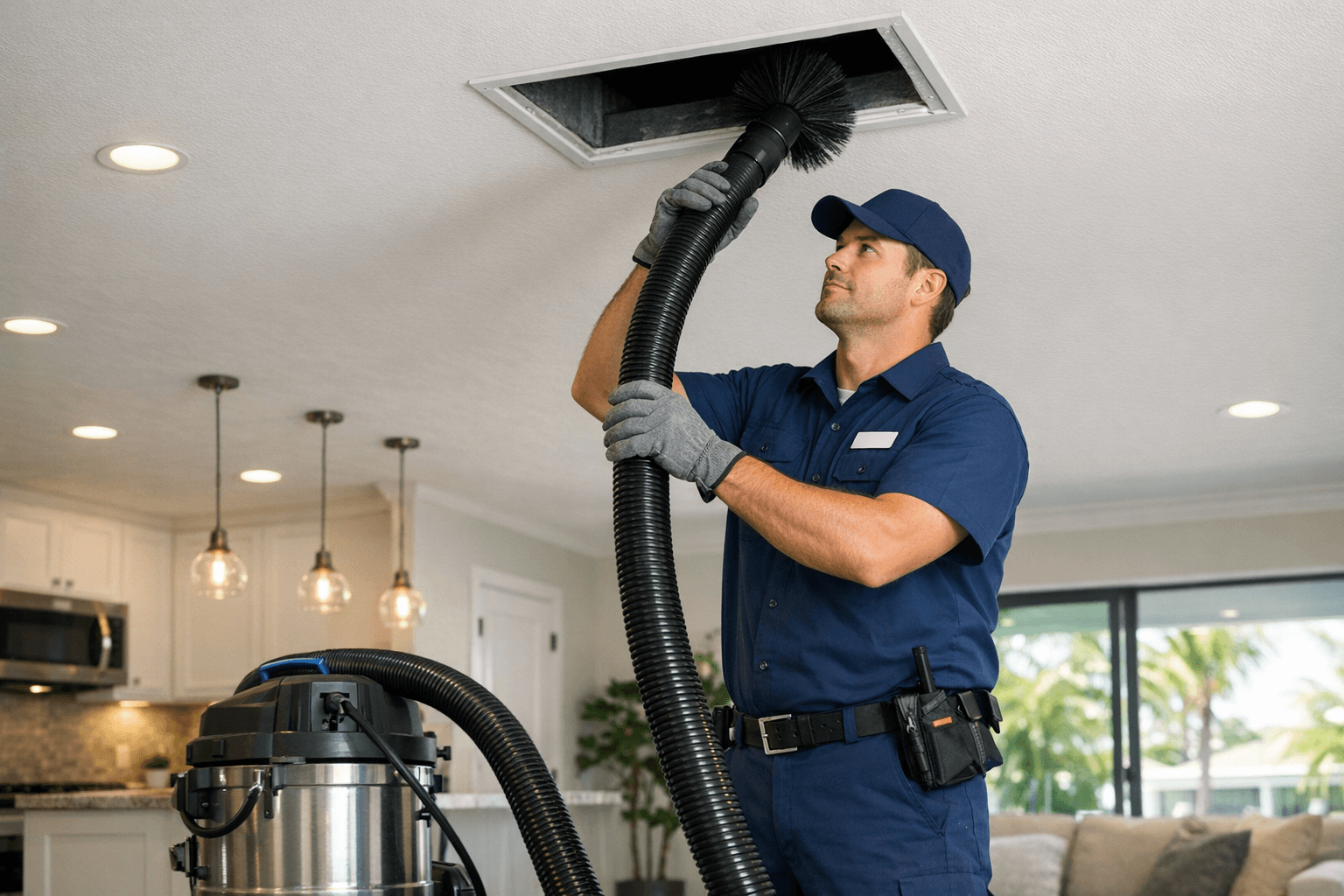
Professional air duct cleaning is a whole HVAC air-distribution cleaning, not a quick vacuum at the vents. A proper service typically includes pre-inspection, protecting your home, source removal cleaning using negative pressure and agitation tools, cleaning key supply/return components, and verification that debris was actually removed. In Florida, reputable professional air duct cleaning commonly ranges from $300-$700, depending on system size, accessibility, and condition.
Table of Contents
- Pre-Service Inspection
- System Protection Setup
- Source Removal Process
- HVAC Component Cleaning
- Verification and Documentation
- What Professional Service Should NOT Include
- Cost in Florida
- Avoid Scams
- FAQs
Pre-Service Inspection
A professional job starts with confirming whether cleaning is actually needed and what level of work is required. EPA-aligned guidance focuses on cleaning when conditions warrant it, not on automatic schedules.
What a technician should inspect before cleaning
- System layout and access points: supply trunk lines, return trunk lines, branch runs, plenum locations, and where safe access can be created.
- Return-side condition: in many Florida homes, the return can collect visible dust and debris faster due to high runtime and humidity control needs.
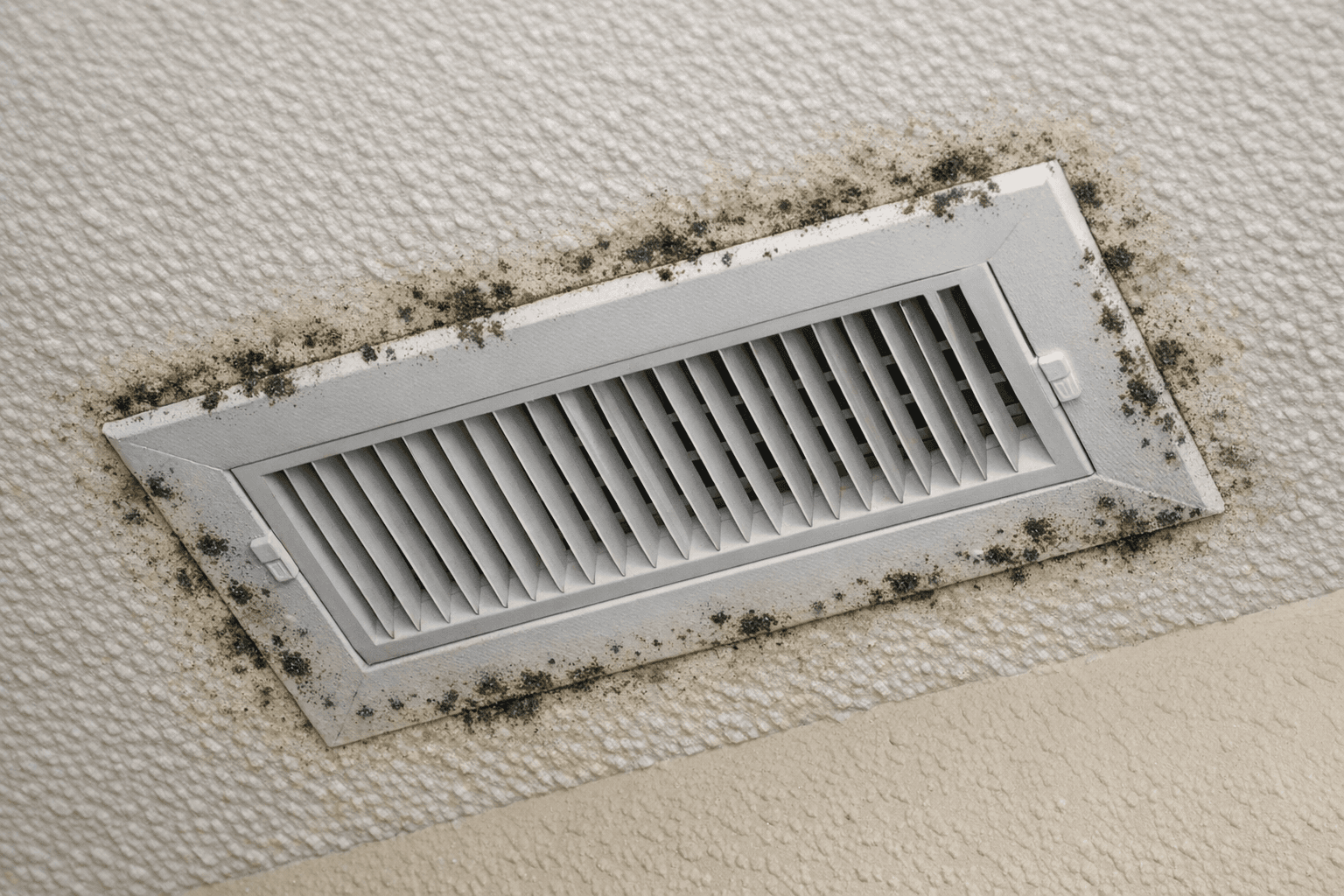
- Registers and grilles: checking for debris, buildup patterns, and any signs of past moisture issues.
- Air handler cabinet area: checking the area around the blower compartment and filter track for bypass dust (a common cause of buildup even with "regular filter changes").
- Filter type and fit: a loose or undersized filter can allow dust to accumulate downstream.
- Duct material and condition: flex duct, duct board, and metal ducts can require different handling. Damaged or deteriorated ducts may be a repair job, not a cleaning-only job.
- Red flags that affect scope: heavy construction debris, pest debris, visible microbial growth-like staining, or standing water/condensation issues.
What you should receive at this stage
- A clear explanation of what will be cleaned (and what won't).
- A plan for how access will be created (existing service openings vs. new access panels that are properly closed/sealed afterward).
- A realistic estimate and service boundaries.
If the inspection shows damaged connections, leaks, or crushed runs, duct cleaning alone may not solve airflow or dust issues. That's when duct repair matters. If you suspect physical duct problems, schedule an inspection through our HVAC evaluation options at /services/system-inspections or discuss repair pathways at /services/duct-repair.
When cleaning is commonly justified (practical examples)
- After remodeling or drywall work where dust migrated into returns.
- When registers blow visible debris or you find ductwork contamination (e.g., dust clumps, insulation particles).
- After a pest event has been professionally resolved, if debris is present in the ductwork.
- When a neglected system has heavy buildup and you're correcting the underlying causes (filter fit, duct leaks, return issues).
System Protection Setup
Before any negative-air equipment is turned on, a reputable crew protects your home and prevents cross-contamination.
Home protection steps that should be included
- Floor and corner protection: drop cloths and mindful hose routing to avoid scuffs.
- Register/grille management: depending on the method, registers may be removed and cleaned, or temporarily covered/sealed during certain phases.
- Safeguards for HVAC components: ensuring the system is off when needed, protecting sensitive controls, and avoiding damage to fins, wiring, and drain components.
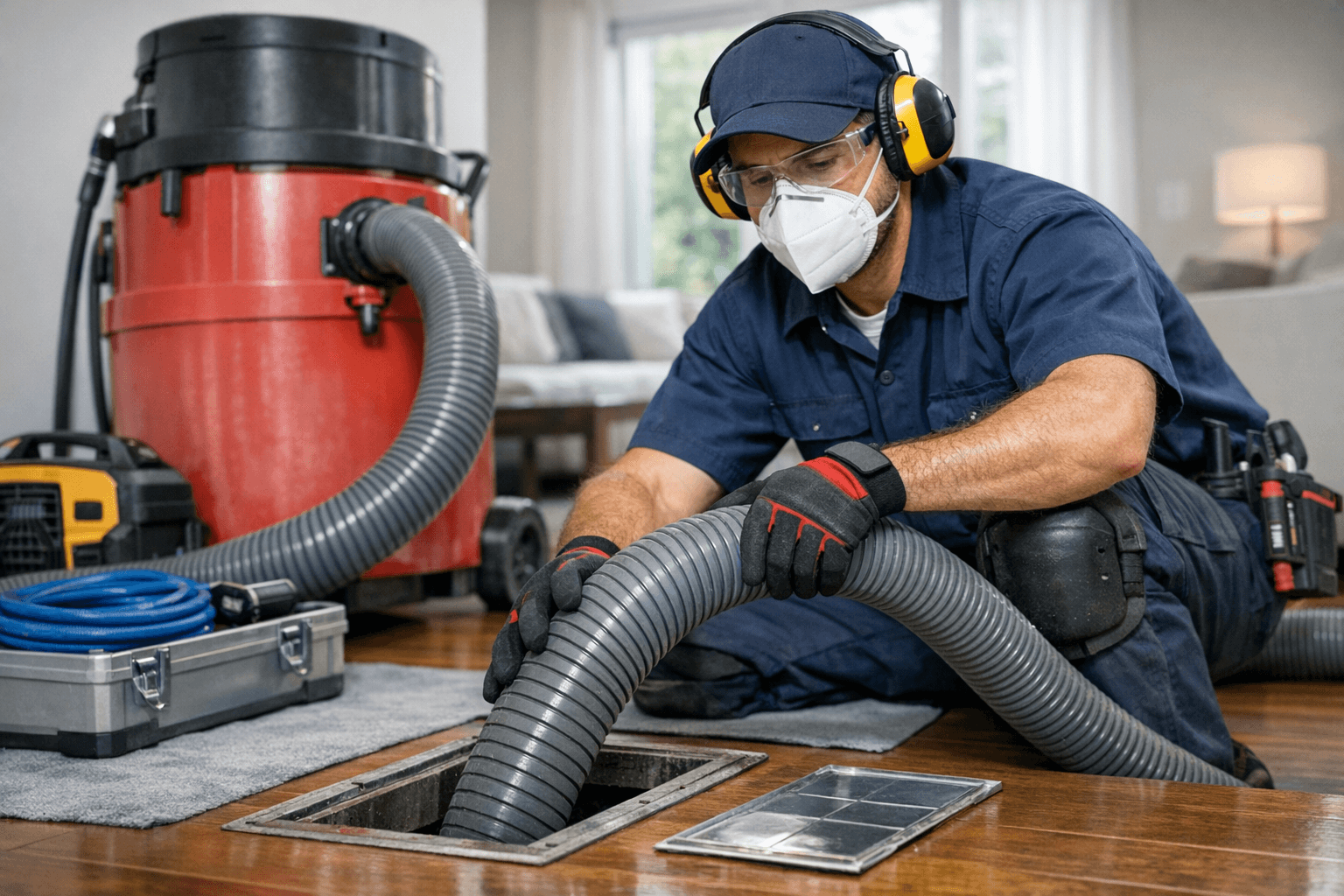
- Debris containment: using HEPA-filtered collection equipment and maintaining negative pressure so loosened debris doesn't blow into living spaces.
Why this matters A professional air duct cleaning process intentionally dislodges debris from inside ducts. Without containment and negative pressure, that debris can end up in your rooms—defeating the purpose of the service.
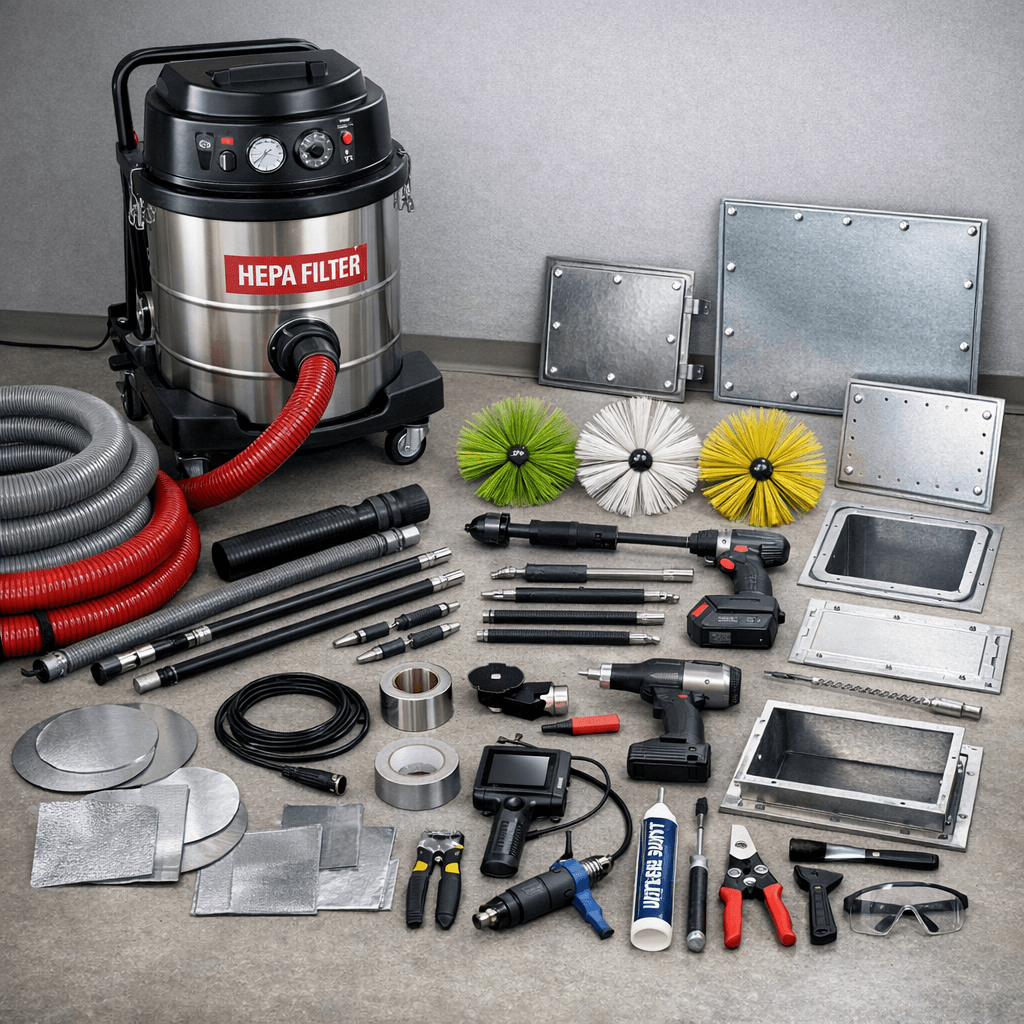
Typical duct cleaning equipment you may see
- A high-powered negative air machine (often truck-mounted or portable) with appropriate filtration.
- Agitation tools matched to duct type (soft-bristle brushes, air whips, skipper balls, or controlled compressed-air tools).
- HEPA vacuum for localized cleanup of registers, cabinets, and surrounding work areas.
- Basic sealing materials for temporary isolation and for closing access points properly afterward.
If your "setup" is only a shop-vac and a 10-minute vent wipe, you're not getting professional-grade cleaning.
Source Removal Process
This is the core of what is included in professional air duct cleaning: source removal cleaning—physically removing debris from the HVAC air distribution system and capturing it outside the living space.
How source removal cleaning is typically performed (step-by-step)
- Step 1: Establish negative pressure
- The technician connects the negative air machine to the trunk line (supply and/or return) using an appropriate access point.
- The system is placed under negative pressure so that dislodged debris is pulled toward the collection device instead of drifting into the home.
- Step 2: Clean the supply side
- Starting from the furthest runs and working back toward the trunk, the technician uses agitation tools to dislodge debris.
- Debris is carried by airflow to the negative air machine for capture.
- Step 3: Clean the return side
- Returns often carry heavier dust loads. A proper service addresses the return trunk and branches, not just the supply lines.
- Step 4: Address branch runs and transitions
- Boots, takeoffs, elbows, and transitions are worked carefully—these areas often hold more buildup.
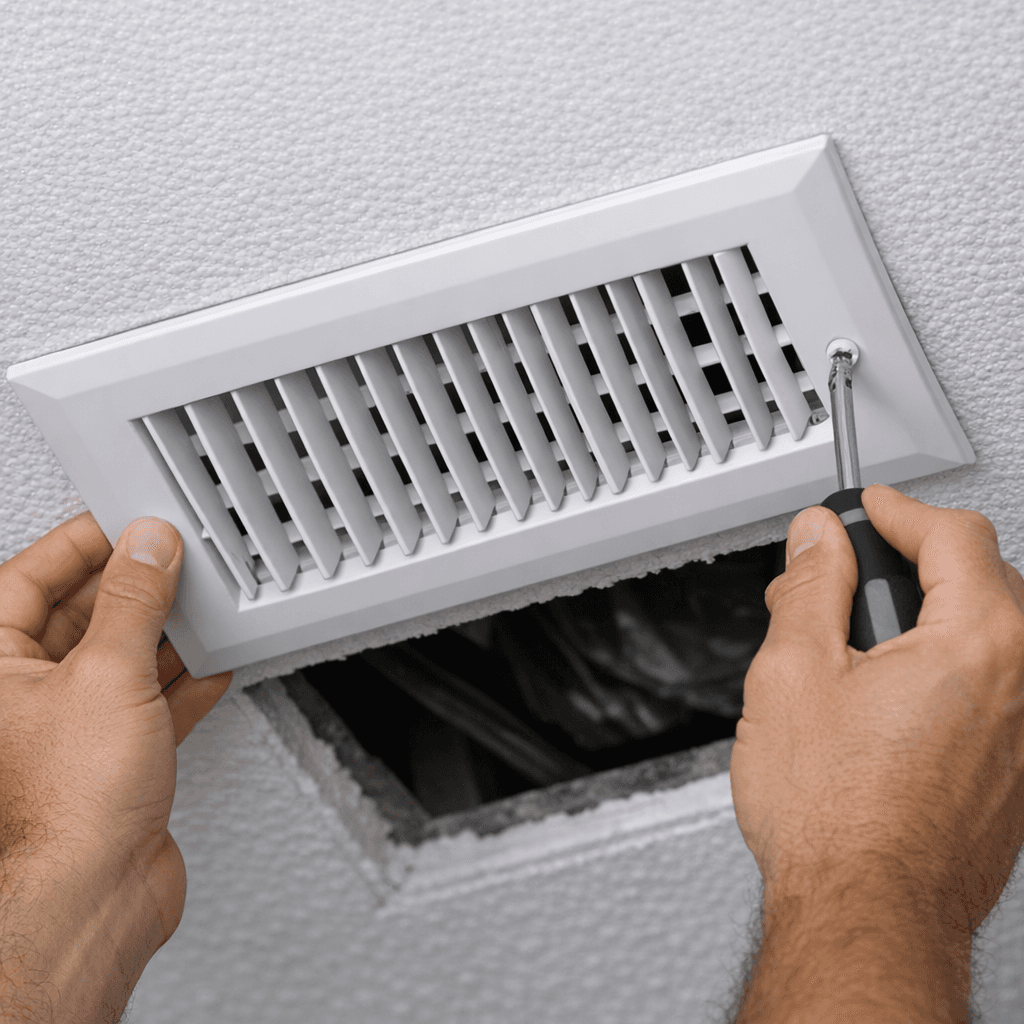
- Step 5: Remove and clean registers/grilles (as applicable)
- Registers/grilles are cleaned and reinstalled, and surrounding areas are tidied.
What "professional" looks like in practice
- The technician can explain how their process aligns with NADCA standards (at a high level) and why negative pressure + agitation is used.
- They clean both supply and return sides, not only the vents you can see.
- They work methodically (not rushing room-to-room with a small hose).
Important note about Florida conditions Florida's humidity and long cooling seasons can amplify comfort complaints when airflow is restricted or when return-side leakage pulls in dusty air from attics, wall cavities, or other non-conditioned spaces. Cleaning can remove existing debris, but lasting results depend on correcting contributors like filter bypass and duct leakage—which is why inspection and (when needed) repair are part of a responsible approach.
For professional cleaning from a team that treats the job as a system—not a quick vent sweep—see /services/air-duct-cleaning or call 813-513-7861.
HVAC Component Cleaning
A common misunderstanding is that "duct cleaning" only means the ductwork. In many homes, the air-moving components and accessible interior surfaces are also part of a complete service scope, when appropriate and accessible.
Components that are commonly included (when in-scope and accessible)
- Supply and return registers/grilles: cleaned and reinstalled.
- Diffuser boots and register boots: cleaned where reachable.
- Return air box / return plenum (accessible portions): often a key collection point.
- Air handler cabinet interior (accessible areas): careful cleaning of accumulated dust and debris on non-sensitive surfaces.
- Blower compartment (as appropriate): light debris removal on accessible areas (full blower pull-and-wash is a different scope and may depend on system design and condition).
What's often not included unless explicitly quoted
- Evaporator coil cleaning: coils require specialized handling, and accessing them may require disassembly. Coil cleaning can be valuable, but it's typically a separate line item.
- Drain pan and condensate line service: important in Florida, but not automatically part of duct cleaning unless specified.
- Duct sealing or redesign: cleaning removes debris; it doesn't fix leaks, poor returns, or undersized ductwork.
Why "components" matter If debris is left in key transition areas (like the return box) or the air handler area is ignored, a "duct-only" job can underdeliver. Professional service should clearly define the boundaries: what will be cleaned, what will be accessed, and what requires additional authorization.
If you want a system-focused approach, consider pairing duct cleaning with a full evaluation at /services/system-inspections. If airflow issues stem from damaged ducting, explore /services/duct-repair.
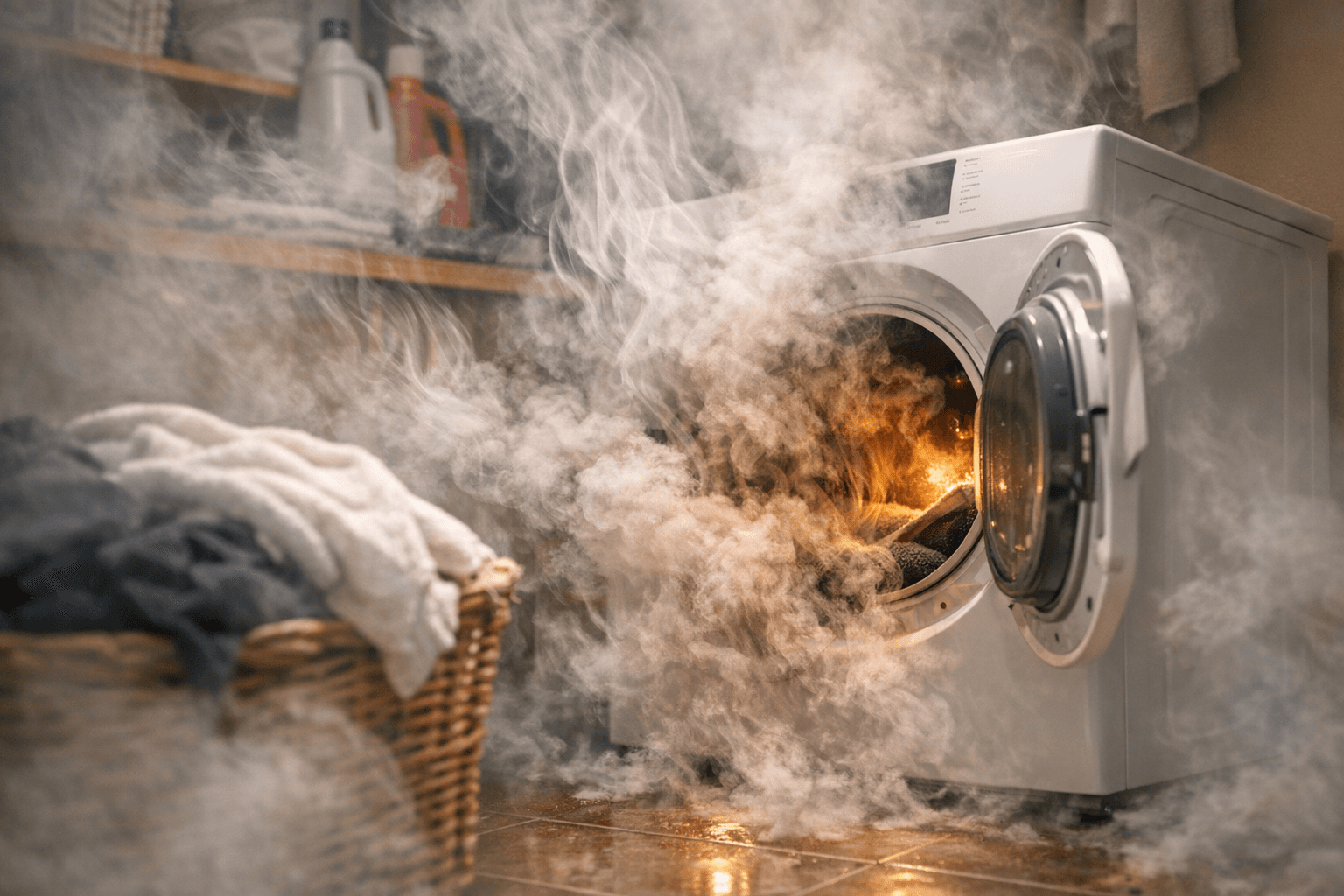
Related (often overlooked) safety and performance item Many homes also need dryer vent maintenance. A clogged dryer vent can create performance issues and fire risk, and it's a separate system from HVAC ducts. If you're planning home airflow and lint management, see /services/dryer-vent-cleaning.
Verification and Documentation
Professional work includes proof and a basic handoff—so you know what was done and what to monitor.
What verification should look like
- Visual confirmation: the tech should be able to show clean interior duct surfaces at access points and key areas (supply trunk, return trunk, return box, boots).
- Before/after photos: not every job requires a photo album, but reputable companies commonly provide clear images of major sections they cleaned.
- Operational check: system turned back on and checked for normal operation (no new rattles, loose registers, disconnected runs, or airflow issues caused by reassembly).
What documentation should include (at minimum)
- The areas cleaned (supply, return, main trunks, branches, registers).
- Any limitations encountered (inaccessible runs, fragile duct sections, restricted chases).
- Any recommended follow-ups (filter fit improvements, duct repair, return-side sealing, insulation issues, or moisture control concerns).
A realistic expectation Duct cleaning is not meant to be an "every year, no matter what" service. A professional should tell you what they observed and whether your system appears likely to need cleaning again soon—or whether your bigger win is fixing filter bypass, leaks, or return design.
What Professional Service Should NOT Include
Knowing what should not be included helps you spot low-quality work and upsells that don't match EPA-aligned guidance.
It should NOT include guaranteed health claims
- No reputable provider should promise that duct cleaning will "cure" symptoms or prevent illness.
- Professional messaging should focus on removing debris, improving system cleanliness, and addressing known contamination—without overpromising outcomes.
It should NOT be "vents only"
- Wiping visible vent covers is not the same as cleaning trunks, branch lines, and return components under negative pressure.
- If the service plan never mentions the return side, that's a concern.
It should NOT automatically include chemicals or "fogging"
- Routine application of biocides, sealants, or fragrances is not a default best practice.
- If any chemical treatment is proposed, you should receive clear product information, the reason for use, and where it will be applied. It should never be presented as mandatory for a standard cleaning.
It should NOT include unsafe shortcuts
- Excessive brushing or aggressive tools on fragile ductwork without care can damage flex duct or duct board.
- Cutting large access holes and failing to reseal properly can create leaks and performance problems.
It should NOT be a surprise price after arrival
- A professional quote should match the home's system realities as closely as possible, with transparent reasons for any change.
If you want a clearly scoped, system-based service, start with our cleaning page at /services/air-duct-cleaning or book through /contact. You can also call 813-513-7861.
Cost in Florida
In Florida, professional air duct cleaning commonly falls in the $300-$700 range.
What influences the price (without guessing or upselling)
- System size and layout: multiple returns, long trunk lines, and more branch runs increase labor.
- Accessibility: tight attic access, limited service openings, and challenging chases can add time.
- Condition: heavy debris loads or post-construction dust can require more passes and verification.
- Duct material: flex duct and duct board require careful tool selection and pace.
- Add-on needs (separate scope): duct repairs, coil cleaning, or drain line service may be recommended if inspection reveals issues—but they should be clearly separated from the duct cleaning price.
What a fair quote should do
- Name the system areas included (supply + return, trunks + branches).
- State how verification will be handled (visual, photos).
- Avoid "one-size-fits-all" pricing that ignores system size.
To request a Florida duct cleaning estimate, call 813-513-7861 or schedule at /contact.
Avoid Scams
Florida homeowners are often targeted with ultra-low "whole house" duct cleaning ads—then hit with aggressive upsells after a rushed walkthrough.
Watch for bait-and-switch pricing (including $99 specials)
- A "$99 whole house duct cleaning" offer is a common setup for a much higher invoice once the crew arrives.
- Typical tactics include claiming urgent contamination, insisting on expensive add-ons, or charging per vent without disclosing total system costs.
How to spot a legitimate service
- They describe the air duct cleaning process using negative pressure + agitation (source removal), not just a vacuum at registers.
- They commit to cleaning both supply and return sides.
- They explain what duct cleaning equipment they'll use (negative air machine, agitation tools, HEPA practices).
- They provide before/after photos or a clear verification method.
- They do not lead with health promises or pressure you into chemicals.
Practical steps to protect yourself
- Ask for the written scope: "supply trunks, return trunk, branches, registers—yes or no."
- Be cautious of quotes that don't reference the full system.
- Decline high-pressure add-ons that don't come with clear reasoning and documentation.
If you want an inspection-led, clearly scoped service, start here: /services/air-duct-cleaning. For scheduling, use /contact or call 813-513-7861.
FAQs
Q: Is professional air duct cleaning the same as vacuuming vents? A: No. Professional service is designed around source removal cleaning: placing the duct system under negative pressure and using agitation tools to dislodge debris so it's captured by collection equipment. Vent-only vacuuming typically doesn't address trunk lines, return-side buildup, or transitions.
Q: How long does professional air duct cleaning take? A: Time varies by system size, accessibility, and condition. A thorough job generally takes longer than a quick "in-and-out" visit because the crew needs time for setup, negative pressure, methodical agitation, component cleaning, and verification.
Q: Do NADCA standards require a specific method? A: In practical terms, reputable contractors commonly align with NADCA-style principles by using source removal, proper containment, and cleaning the system components in a systematic way. The key is that debris is actually removed from the HVAC air distribution system, not redistributed.
Q: Will duct cleaning solve dust in my home? A: It can remove existing debris inside ductwork, but it doesn't automatically fix the sources of ongoing dust. Common contributors include filter bypass, leaky returns drawing dusty air from unconditioned spaces, and duct damage. If dust returns quickly, a system evaluation may be more valuable than repeat cleanings. See /services/system-inspections and /services/duct-repair.
Q: Should ducts be cleaned on a fixed schedule in Florida? A: Not necessarily. EPA-aligned guidance emphasizes cleaning when needed—for example, after remodeling dust, confirmed contamination, or heavy accumulation that's affecting system cleanliness. A trustworthy company should explain what they found and why cleaning is (or isn't) warranted.
Q: What else should I consider cleaning at the same time? A: If your dryer takes longer to dry or you haven't serviced the vent in a while, dryer vent cleaning is often a smart, separate service with clear safety benefits. Learn more at /services/dryer-vent-cleaning.
Q: How do I book a professional duct cleaning estimate in Florida? A: Call 813-513-7861 or schedule through /contact. You can also review service details at /services/air-duct-cleaning and see our Florida coverage at /service-areas.
Related Services
Service Areas
Get Your Air Ducts Professionally Cleaned Today
If you want to understand what's actually in your duct system—and whether cleaning is the right move—schedule an inspection-led service with Air Duct & Chimney Services.
Call 813-513-7861 or schedule online.