Signs Your Air Ducts Have Mold (Florida Homes)
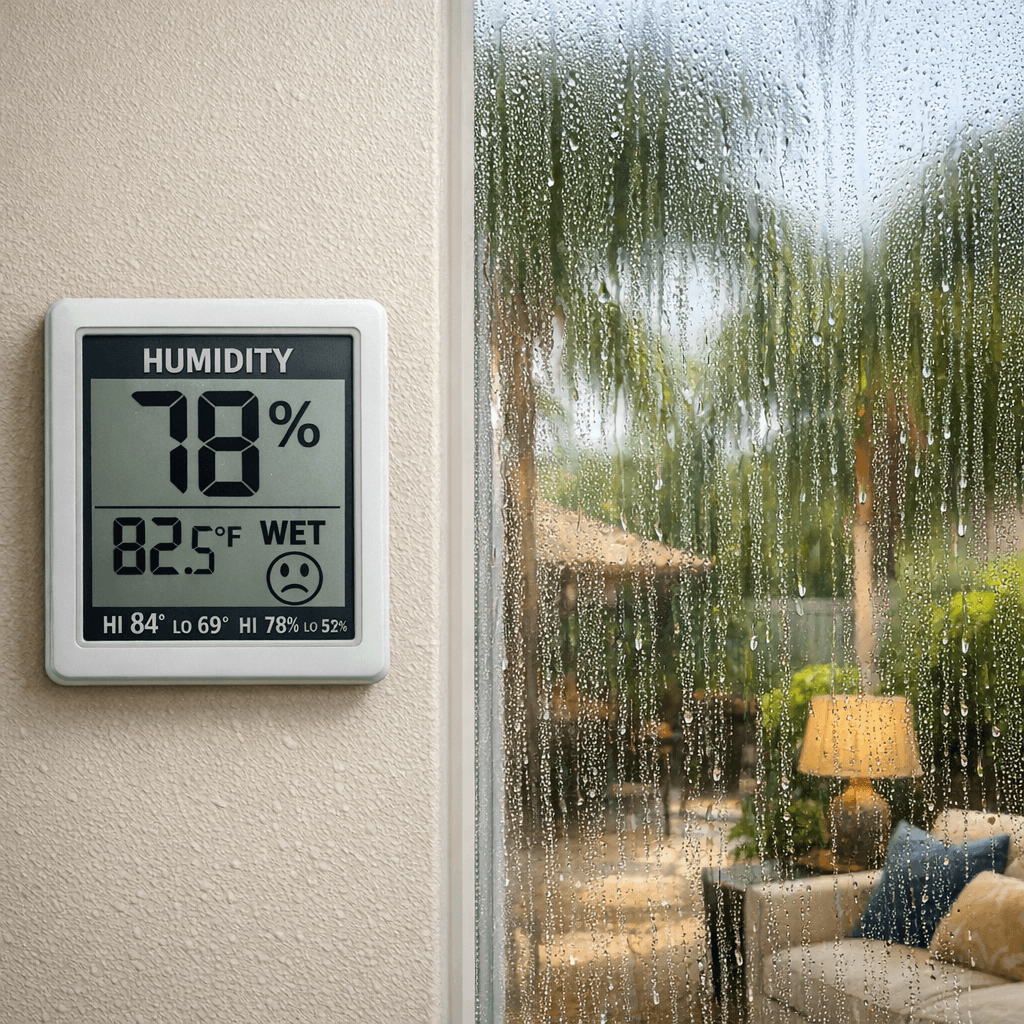
Quick answer: Florida humidity makes moisture control a year-round job. When moisture gets into an HVAC system, it can support mold in air ducts and on nearby components. If you suspect HVAC mold, the priority is simple: confirm what is actually present, fix the moisture source, then clean or repair only what is needed. Call Air Duct & Chimney Services at 813-513-7861 for a professional evaluation.
Table of Contents
- Fast Take for Florida Homes
- Warning Signs of Mold in Ductwork
- Why Florida Homes Get Duct Moisture Problems
- What to Do If You See Air Duct Mold Signs
- How Professionals Confirm Mold and Moisture
- Cleaning, Repair, and Prevention Options
- Cost Expectations and Scam Pricing to Avoid
- FAQs
Fast Take for Florida Homes
If you want the shortest, practical checklist for air duct mold signs Florida homeowners see most often, start here.
Most common signs:
- Persistent musty, damp odor that returns when the AC runs
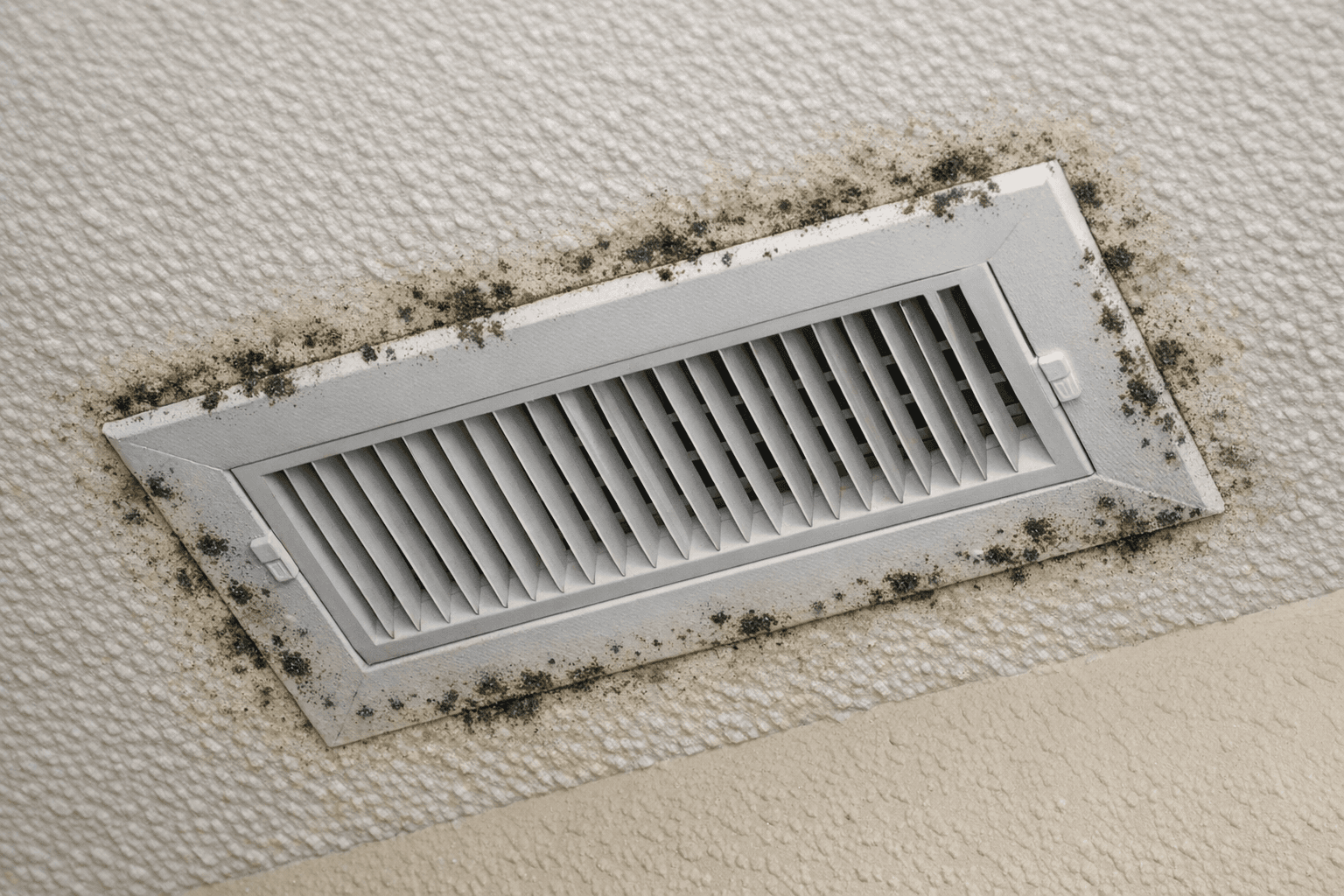
- Dark spotting on supply vents or nearby ceiling/wall areas
- Visible growth inside the vent boot or on the first inches of duct liner
- Condensation at vents, on ductwork in unconditioned spaces, or on the air handler cabinet
- Rooms that feel clammy even when the thermostat is set low
- Repeated drain line clogs or overflow around the air handler
What those signs usually indicate:
- Moisture is present where it should not be (humidity infiltration, sweating ducts, negative pressure pulling humid air, or a drainage issue)
- Debris plus moisture is creating a place for growth
- There may be a duct leak, insulation failure, or air balance problem contributing to condensation
What to do first:
- Do not scrub vents or fog chemicals into the system
- Change the HVAC filter if it is overdue and safely accessible
- Book a system evaluation so moisture and duct conditions are verified before any cleaning or repair
For professional help in Florida, schedule an inspection with Air Duct & Chimney Services at 813-513-7861 or book online at /contact. You can also review available options on our system inspections page.
Warning Signs of Mold in Ductwork
The goal is not to guess. The goal is to recognize patterns that justify a closer inspection. Below are the most dependable signs of mold in ductwork in Florida homes, along with what to look for and what it typically means.
Musty Odor That Tracks with HVAC Runtime
What you notice:
- A damp, earthy smell that is stronger when the AC cycles on
- Odor that returns after cleaning rooms or changing air fresheners
What it can mean:
- Moisture and organic dust are present somewhere in the HVAC system
- Growth may be in the return side, supply side, air handler cabinet, or around the evaporator coil area
Quick check:
- Smell near a few supply registers and near the return grille
- If odor is strongest at one area, that can help narrow the inspection
Visible Spotting on Supply Registers, Vent Boots, or Adjacent Surfaces
What you notice:
- Dark dots on the metal register face
- Spotting just inside the vent opening or on the metal boot
- Discoloration on the ceiling line around a vent
What it can mean:
- Condensation at the register or boot
- Cold air hitting humid indoor air, creating moisture at the surface
- Dust trapped on a damp surface, which can look similar to growth
Important: Not every dark mark is mold, and not every mold problem is visible from the room side. The pattern and moisture evidence matter.
Condensation at Vents or Sweating Ductwork
What you notice:
- Water beads on vents
- Drips or stains near registers
- Damp insulation around ducts in an attic, garage, or other unconditioned space
What it can mean:
- Insulation is missing, compressed, or poorly sealed
- Duct leaks are pulling humid air into cold duct surfaces
- Indoor humidity is staying too high for too long
In Florida, condensation is one of the biggest drivers of HVAC mold issues.
Recurring Drain Line Clogs, Overflow, or Water Marks Near the Air Handler
What you notice:
- Wetness at the base of the air handler
- A pan that repeatedly fills
- Past overflow staining
What it can mean:
- Drainage is not flowing correctly, keeping the area damp
- Standing water increases the risk of growth on nearby surfaces
Excess Dust That Returns Quickly, Especially with a Musty Smell
What you notice:
- Dust reappears soon after cleaning
- Dust puffs from registers when the system starts
- Odor plus dust together
What it can mean:
- Duct leakage pulling in attic or wall cavity dust
- Return-side leaks introducing debris that can collect where moisture is present
Dust alone does not prove mold in air ducts, but dust plus moisture indicators deserves a closer look.
One or Two Rooms That Feel Clammy Compared to the Rest of the Home
What you notice:
- A specific room feels damp even when temperature is comfortable
- That room shows more vent condensation or surface spotting
What it can mean:
- Airflow imbalance, supply restriction, or duct sizing issues
- Leaky ducts in unconditioned areas
- Humidity control is not keeping up in that zone
Fast check: If you're seeing multiple air duct mold signs (odor, spotting, condensation, water marks), book an evaluation before paying for any cleaning. Call 813-513-7861 or schedule at /contact.
Why Florida Homes Get Duct Moisture Problems
Mold needs moisture. Florida supplies that moisture in several predictable ways, especially when the building envelope and HVAC system are slightly out of tune.
High Outdoor Humidity Entering Through Leaks and Pressure Imbalances
Even well-built Florida homes can end up with:
- Return leaks that pull humid air from attics, garages, or wall cavities
- Negative pressure zones that draw humid outdoor air inside through gaps
When that moisture meets cold HVAC surfaces, condensation can start.
Cold Surfaces Plus Humid Indoor Air Equals Condensation
Common condensation points include:
- Supply boots and metal registers
- Uninsulated or poorly insulated duct runs in unconditioned spaces
- The air handler cabinet and areas near the coil
Condensation is a leading contributor to HVAC mold Florida complaints because it repeats daily during long cooling seasons.
Drainage and Maintenance Issues Around the Air Handler
If condensate does not drain correctly, the area stays damp. That can affect:
- The cabinet interior surfaces
- Insulation near the cabinet
- Nearby duct connections
Duct Insulation and Sealing Problems in Unconditioned Spaces
In Florida, ducts often run through hot, humid spaces. Problems that raise risk:
- Disconnected ducts or loose collars
- Torn or missing outer jacket on flex duct
- Compressed or wet insulation
- Improperly sealed boots at ceiling penetrations
If you suspect duct leakage or insulation failure, duct-focused evaluation and repairs are usually more effective than repeated cleaning. See duct repair.
What to Do If You See Air Duct Mold Signs
These steps are designed to limit spread, protect the HVAC system, and avoid paying for the wrong solution.
Step 1: Avoid DIY Scrubbing Inside Ducts
Do not:
- Brush or wipe deep into ductwork
- Spray household cleaners into vents
- Use ozone or "fogging" marketed as a cure-all
Disturbing suspected growth can spread debris, and masking odors does not solve moisture. Cleaning should be targeted and justified by inspection findings.
Step 2: Replace the Air Filter If Overdue and Safely Accessible
A clogged filter can restrict airflow and contribute to coil and duct condensation. Use the correct size and ensure it seats properly.
This is not a mold fix, but it is a basic control step.
Step 3: Look for Moisture Evidence Around Vents and the Air Handler
Without taking anything apart, note:
- Which rooms show condensation or spotting
- Whether the odor is strongest near a particular return or supply
- Any water marks near the air handler closet
Document with photos. This helps a technician focus the inspection.
Step 4: Get a System Inspection to Confirm Conditions
In Florida, the right sequence is:
- Confirm what is present
- Identify the moisture source
- Decide whether cleaning, repair, or both are needed
Start with a system inspection. If duct leakage or damage is found, plan for duct repair. If debris and contamination are confirmed, plan for air duct cleaning.
Step 5: Clean Only When Needed, and Fix Moisture First
EPA-aligned guidance emphasizes cleaning when there is a reason, not on a fixed schedule. The most common valid reasons include:
- Visible contamination consistent with growth
- Ducts clogged with substantial debris
- Evidence of water issues affecting HVAC components
- Post-event contamination that warrants remediation
In many Florida homes, moisture control and sealing issues are the primary problem. Cleaning without fixing moisture tends to be temporary.
How Professionals Confirm Mold and Moisture
A proper evaluation is part visual, part mechanical, and part common sense about building science in humid climates.
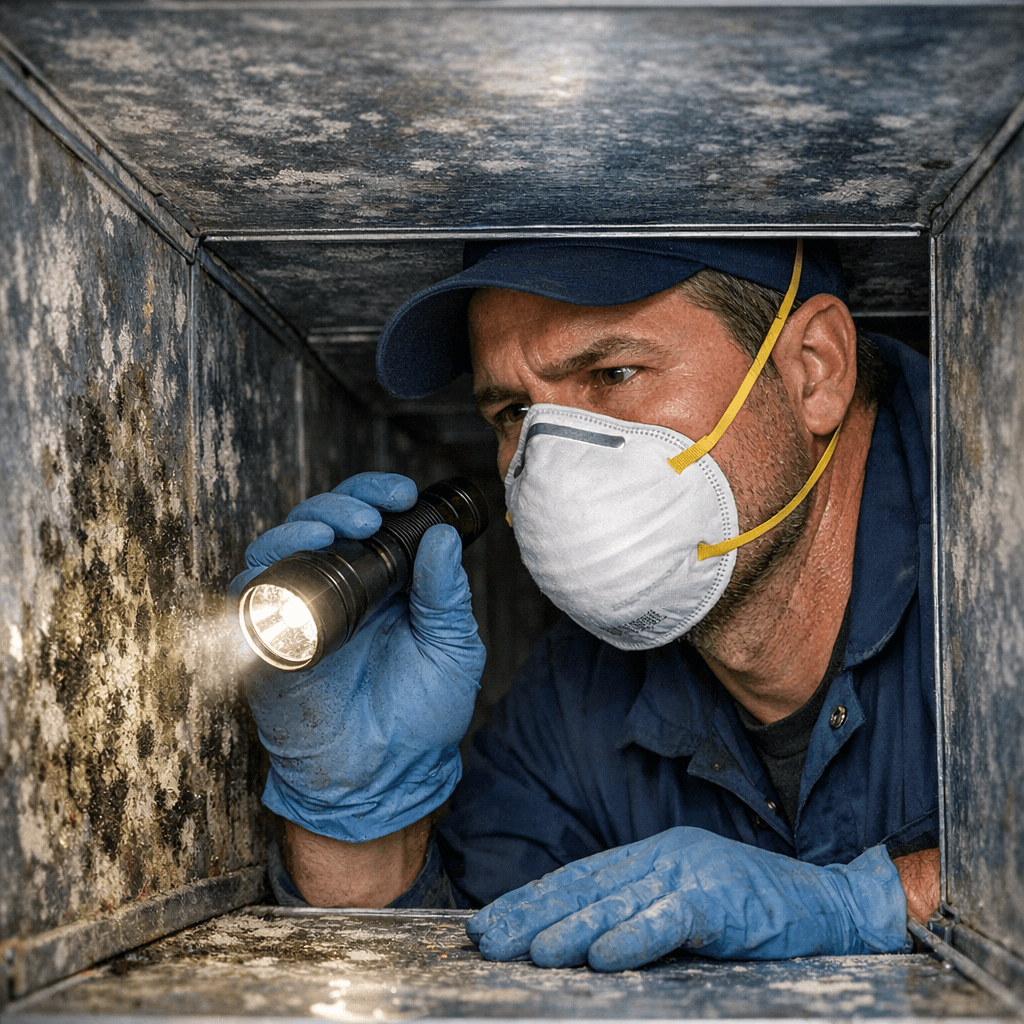
Visual Inspection of Accessible Duct Sections and HVAC Components
A thorough inspection may include:
- Supply and return plenums
- Register boots
- Accessible trunk lines
- Air handler cabinet interior (as accessible)
- Signs of past water intrusion
Technicians should differentiate between:
- Dust staining
- Rust from condensation
- Organic growth patterns that track with dampness
Moisture and Airflow Indicators
To connect symptoms to causes, pros look for:
- Condensation patterns and insulation condition
- Duct leakage indicators (loose connections, gaps, torn jackets)
- Restricted airflow that can increase coil icing and excess condensate
- Return-side issues that pull humid air from unconditioned zones
When Cleaning is Appropriate
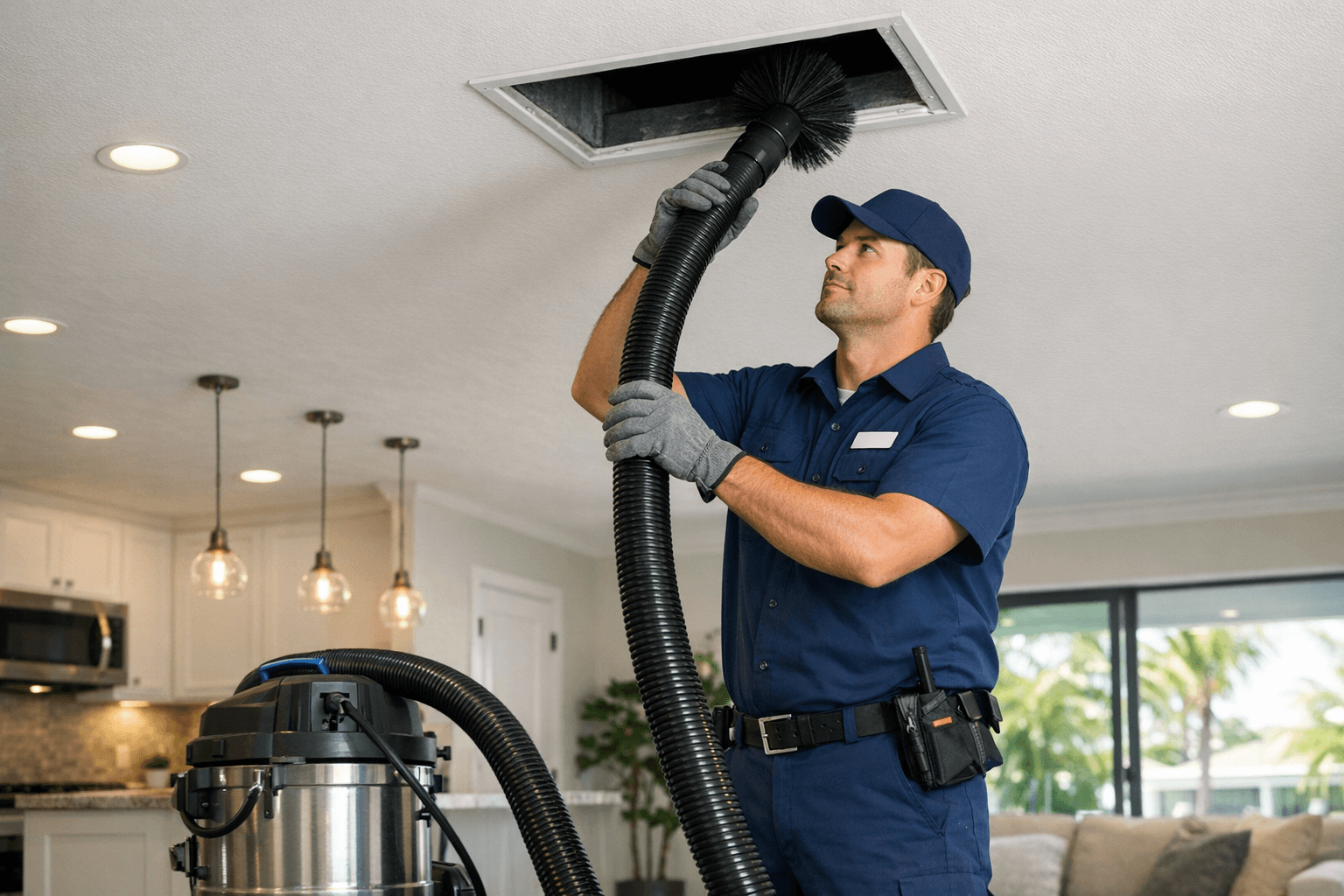
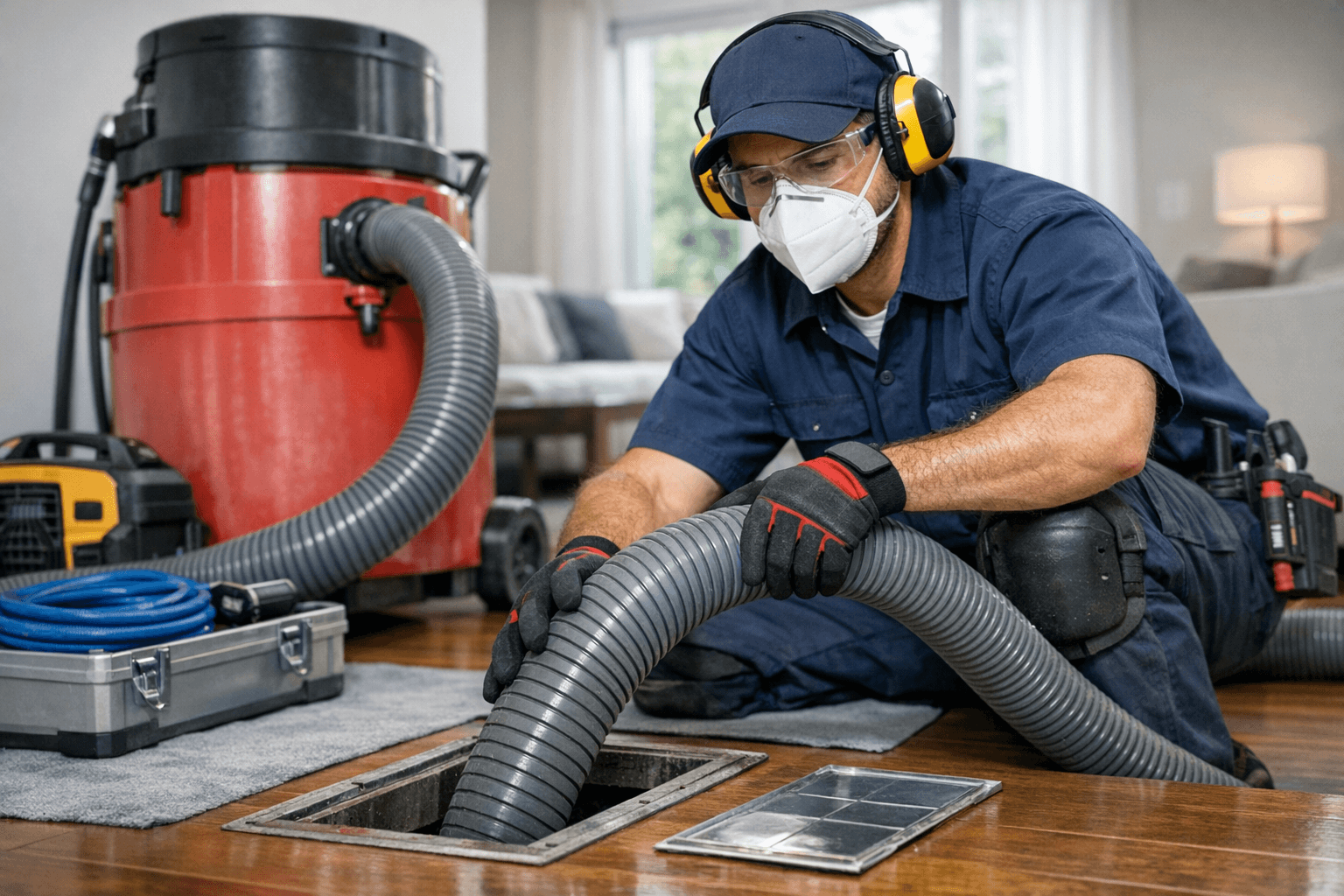
If inspection findings support it, professional source-removal cleaning targets:
- Collected debris that holds moisture
- Areas with confirmed contamination
- Duct sections where buildup is significant
Learn what to expect on our air duct cleaning page.
When Repair is the Better First Step
Cleaning is not a substitute for fixing:
- Disconnected ducts
- Wet insulation
- Leaky return plenums pulling humid air
- Poorly sealed boots creating condensation lines at ceilings
Those situations point to duct repair first.
Cleaning, Repair, and Prevention Options
Once the source of moisture and the condition of the ducts are known, the solution is usually a combination of targeted services and prevention steps.
Option A: Targeted Duct Cleaning When Conditions Justify It
A quality cleaning job focuses on:
- Source removal with professional equipment
- Containment practices that minimize mess
- Cleaning the sections that actually need it based on inspection
A good contractor should be clear about what will be cleaned, what will not, and why.
Option B: Duct Sealing and Repairs to Stop Humid Air Intrusion
Common Florida duct repairs that reduce condensation risk:
- Reconnecting separated ducts
- Sealing leaky joints and boots
- Replacing crushed or damaged flex duct sections
- Restoring insulation and vapor barrier integrity where possible
This is often the most durable fix for recurring Florida humidity mold patterns connected to sweating ducts.
Option C: Moisture Control Habits That Reduce Recurrence
Practical steps that help many Florida homes:
- Keep interior doors open for better return airflow where appropriate
- Use bath fans during showers and run them long enough to clear moisture
- Avoid setting the thermostat extremely low in high humidity, which can increase register sweating
- Address roof leaks, plumbing leaks, and window water intrusion quickly
Option D: Ongoing Monitoring Rather Than Unnecessary Repeat Cleanings
After repairs and cleaning when needed:
- Monitor vent condensation during peak humidity
- Watch for odor recurrence tied to HVAC runtime
- Keep filters changed on time
If symptoms return, it usually indicates moisture has returned, not that cleaning "wore off."
Cost Expectations in Florida and Scam Pricing to Avoid
Typical Price Range for Professional Air Duct Cleaning
For many Florida homes, air duct cleaning commonly runs $300-$700, depending on system size, access, and verified scope.
If a price is far outside that range, confirm exactly what is included and whether the contractor has actually inspected your system.
Warning Signs of Bait-and-Switch "$99 Whole-House" Offers
Florida homeowners regularly report pricing that starts low and escalates once the crew arrives. Watch for these red flags:
- Advertising a whole-house cleaning for $99, then claiming you "must" buy add-ons on site
- Refusing to explain what parts of the system will be cleaned
- High-pressure tactics tied to fear-based claims
- Claims that cleaning is required on a rigid schedule for every home
A fair contractor explains findings, shows you what they see, and recommends cleaning only when conditions justify it.
Related Services
Service Areas
Get Your System Inspected Today
If you're seeing warning signs like musty odors tied to AC cycles, vent condensation, or spotting around registers, don't wait for it to get worse.
Call Air Duct & Chimney Services at 813-513-7861 or schedule online.
FAQs
Q: How do I tell if dark spots on vents are mold or just dust? A: Dark spotting can be dust that sticks to damp surfaces, especially near sweating registers. Confirmation requires looking for moisture patterns, growth texture, and location, not just color.
Q: How often should Florida homes clean air ducts for mold prevention? A: Duct cleaning is best handled on an as-needed basis when inspection findings support it, especially after confirmed contamination, heavy debris buildup, or moisture events.
Q: What reduces the chance of HVAC mold coming back? A: The most reliable reductions come from stopping moisture and humid air entry. This typically includes fixing duct leaks, correcting insulation issues, and resolving drainage or water intrusion problems.
Q: When is duct repair more effective than cleaning? A: If ducts are disconnected, damaged, leaking, or have wet insulation, repairs usually come first. Cleaning without repair can leave the moisture pathway in place.
Q: What should I do when I see condensation on vents? A: Vent condensation points to an insulation, sealing, airflow, or humidity control issue. Document where it happens and arrange an inspection to identify why it is occurring.
Q: How do I schedule an inspection? A: Call 813-513-7861 or schedule online at /contact. You can also review our inspection approach at system inspections.