Burning Smell From Dryer: Causes, Risks, and What to Do
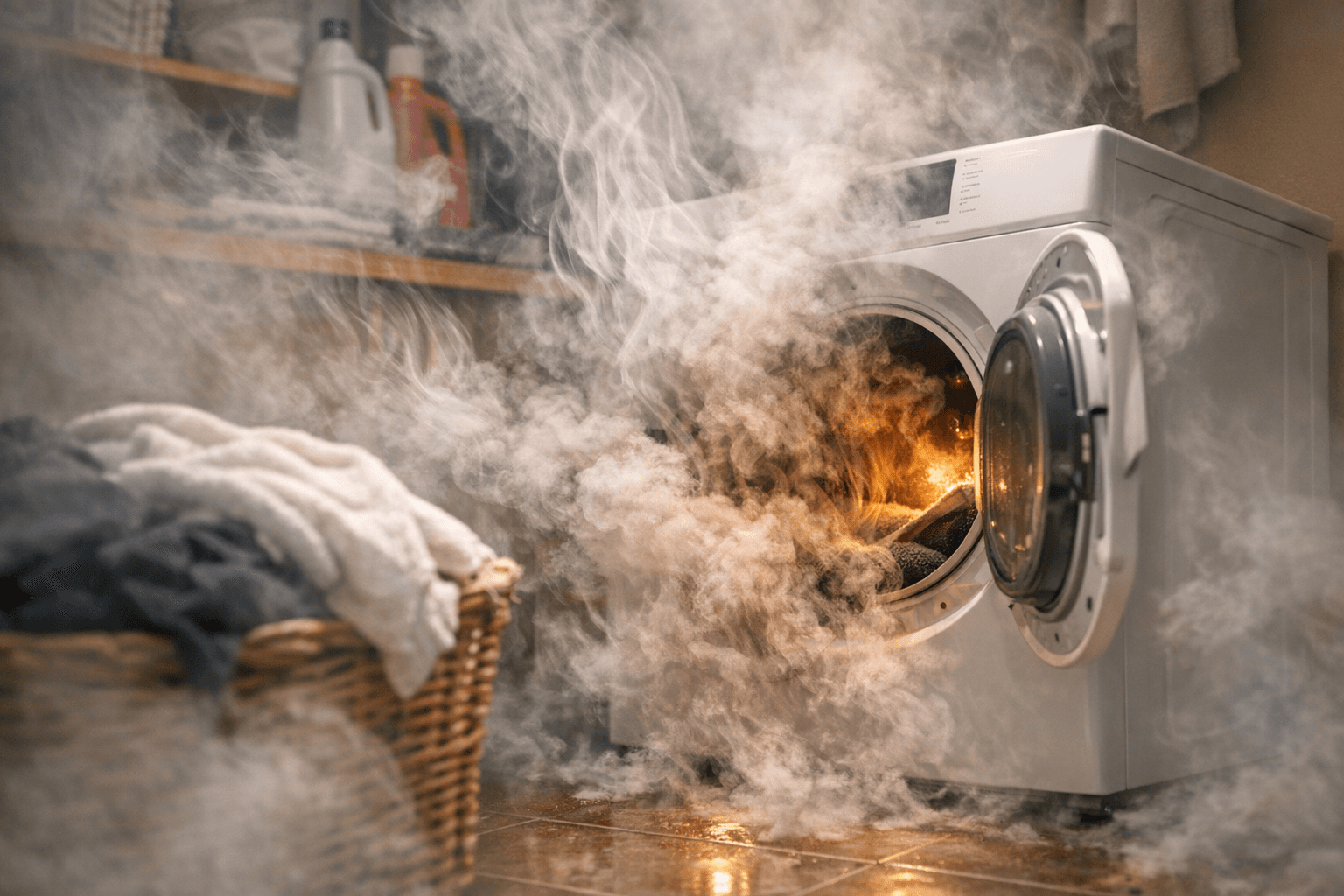
If you notice a burning smell from a dryer, treat it as a safety issue first. Stop the cycle, turn the dryer off, and keep the door closed until you're sure there's no smoke or active fire. Many "burning" odors come from lint buildup, a vent blockage, or overheating parts—all of which can escalate quickly. If the smell returns after basic checks, do not keep testing it—get it inspected.
Table of Contents
- Immediate Steps
- Common Causes
- When It Is an Emergency
- Florida-Specific Risks
- DIY Safety Checks
- Professional Inspection
- Cost in Florida
- Prevention
- FAQs
Immediate Steps
Use this short checklist the moment you detect a dryer smells like burning odor.
Do this now (in order)
- Stop the dryer immediately.
- Turn it off and unplug it (electric).
- If it's a gas dryer, turn off the gas supply valve (usually on the rigid gas line behind the unit) and avoid running it again.
- Do not run another "test load." Repeated cycling can worsen overheating, friction, or lint ignition risk.
- Check for visible smoke around the control panel, rear vent outlet, and the laundry area.
- If you see smoke, hear popping, or smell strong electrical burning: leave the area and call 911.
What not to do
- Don't ignore it because "it went away." Intermittent odors often mean intermittent overheating.
- Don't spray air freshener or deodorizer into/around the dryer.
- Don't pull the dryer out while it's running.
- Don't keep resetting breakers if the smell is electrical—this can create additional hazard.
Need help in Florida today
For a professional dryer vent inspection/cleaning, call Air Duct & Chimney Services at 813-513-7861 or book online at https://proairchimney.com/contact. You can also use the site contact page: /contact.
Common Causes
A burning smell from dryer can come from airflow problems, mechanical friction, electrical issues, or normal "burn-off" in very limited scenarios. Below are the most common causes we see in Florida homes.
1) Lint buildup (inside the dryer or the vent)
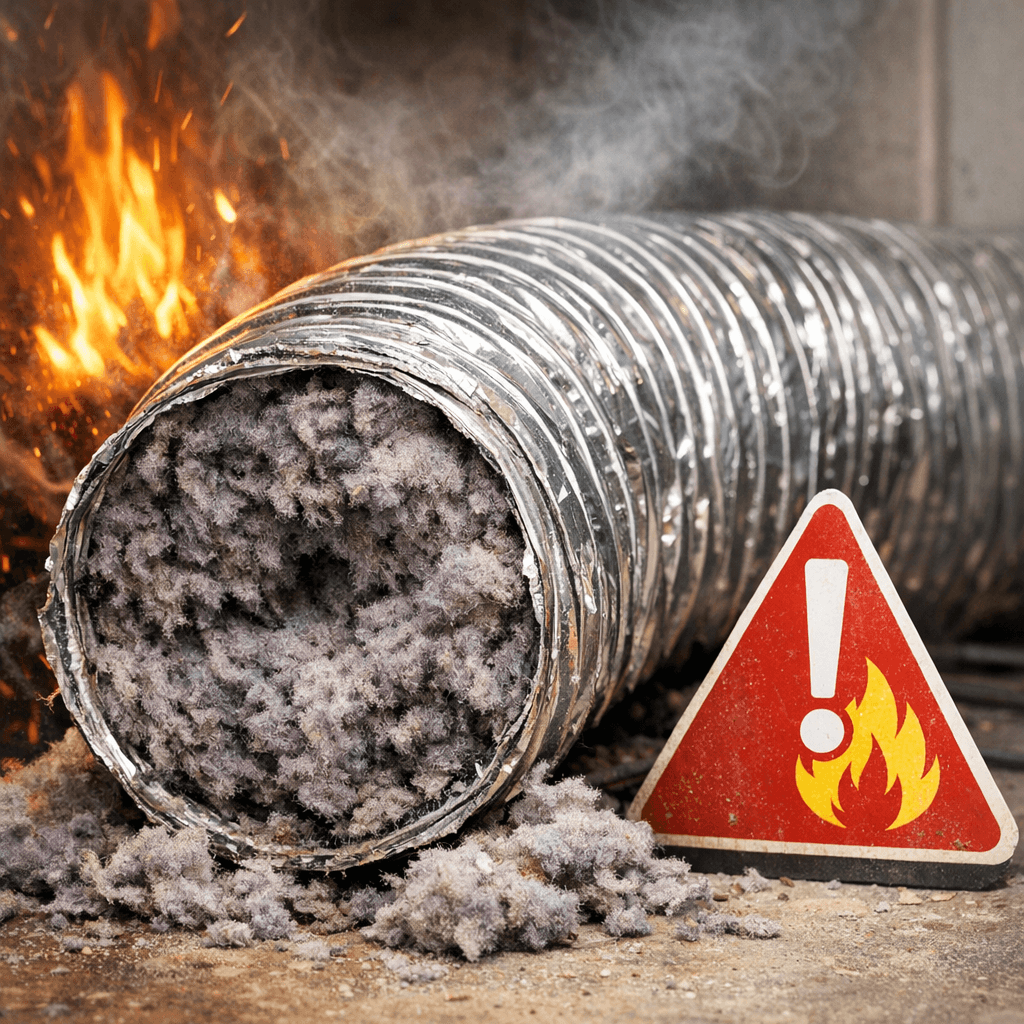
Lint is highly combustible. When lint collects in the lint screen housing, blower area, transition hose, or the vent line, it restricts airflow and traps heat. That combination can create:
- A hot, "toasty" burning odor
- Overheating shutoffs
- Longer dry times
- Excessively hot cabinet or laundry room
This is one of the top contributors to lint fire risk and a major reason to treat vent maintenance as safety maintenance—not just efficiency.
2) Dryer vent blockage (restricted exhaust)
A dryer vent blockage can be caused by:
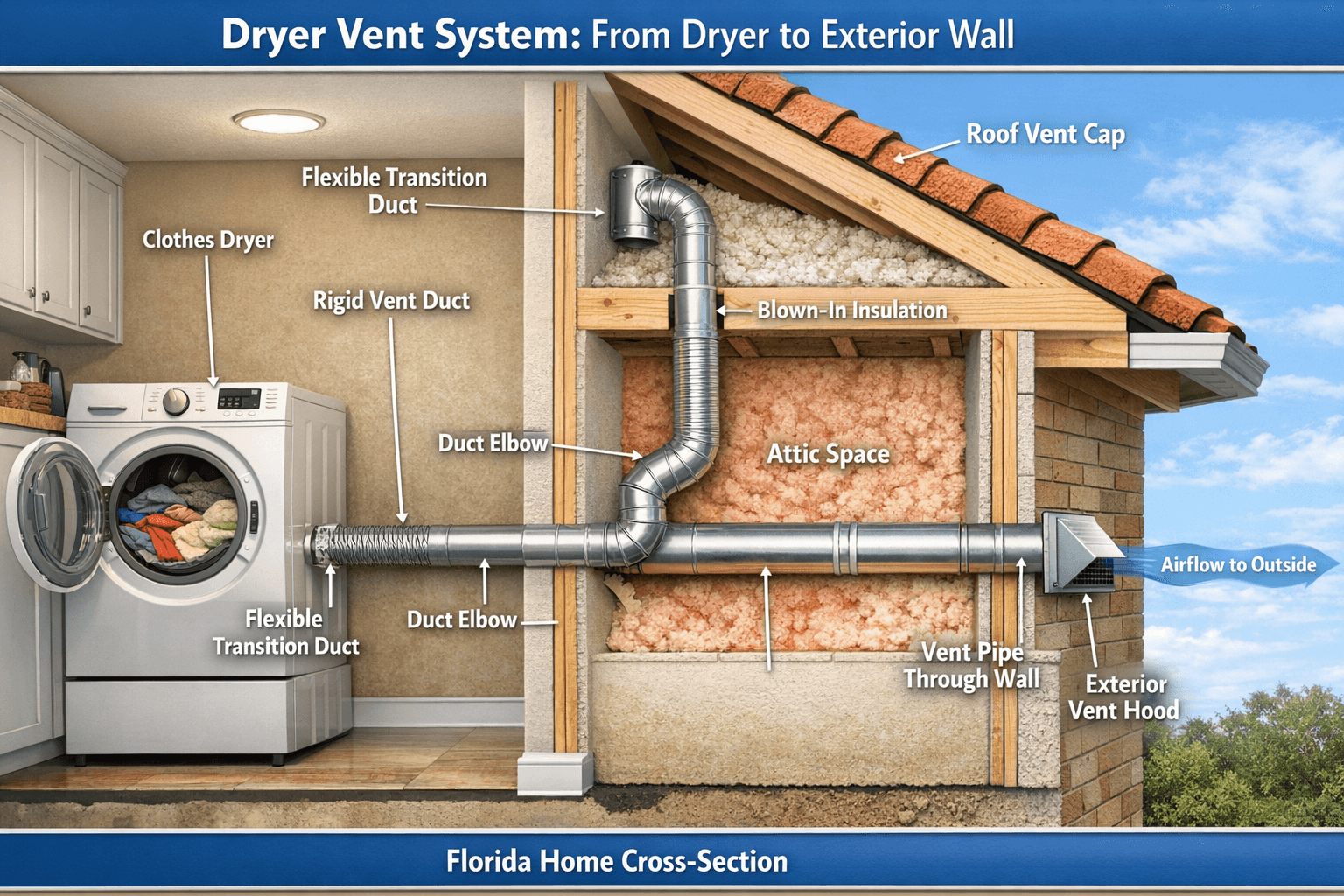
- A crushed or kinked transition hose behind the dryer
- Excessively long vent runs
- Too many elbows/turns
- Lint caked inside the duct
- A blocked exterior hood (lint mat, stuck damper)
- Improper vent materials (thin foil flex that sags and traps lint)
When exhaust can't leave, the dryer runs hotter than designed and can smell like burning.
3) Overheating due to poor airflow (even without a "full blockage")
Even partial restriction can overheat the system. Common clues:
- Clothes are hot but still damp
- The dryer runs longer than normal
- The laundry room feels unusually humid and warm
- The outside vent flap barely moves during a cycle
4) Mechanical friction (belt, rollers, idler pulley)
If a belt is slipping or a roller/idler is failing, friction can create a burning rubber or hot metal odor. You may also notice:
- Squealing, thumping, or grinding sounds
- Drum not turning smoothly
- A smell that appears a few minutes into the cycle (as parts heat up)
Mechanical friction is not a "wait and see" situation—parts can fail suddenly and may overheat nearby lint.
5) Electrical overheating (wiring, terminal block, control board)
An electrical burn smell is often sharper and harsher than "hot lint." Possible sources include:
- Loose power cord connections
- Damaged terminal block
- Failing components on the control board
- Overheated outlet or plug
If you suspect electrical burning, stop using the dryer and avoid repeated plug/unplug cycles until it's inspected.
6) Heating element or gas burner issues
Electric dryers can develop issues where the heater cycles improperly. Gas dryers can have burner/ignition issues that lead to abnormal heat, delayed ignition, or odors. Either way, a persistent burning smell should be inspected rather than guessed.
7) Something heat-sensitive got into the dryer
It happens more than people think:
- Foam-backed rugs
- Rubber items
- Crayons
- Hair accessories
- Cleaning wipes or solvent residue on rags
If a foreign item melted, the odor can linger. Even then, verify airflow and vent condition—because restricted airflow can turn a small mistake into a dryer fire hazard.
8) "New dryer smell" (limited and short-lived)
A brand-new dryer (or newly installed heating component) can produce a mild "hot" smell during the first few cycles. This should:
- Be mild
- Fade quickly
- Not smell like plastic burning or electrical burning
- Not be accompanied by smoke, tripping breakers, or overheating
If the odor is strong or persists beyond the first few uses, treat it as a fault—not normal.
When It Is an Emergency
Stop troubleshooting and treat it as an emergency if any of the following are true.
Call 911 (or leave and get help) if you notice
- Smoke coming from the dryer, wall, or vent area
- Flames (even a small one) in or around the dryer
- A burning odor that becomes intense within seconds
- Crackling/popping sounds from the dryer or outlet
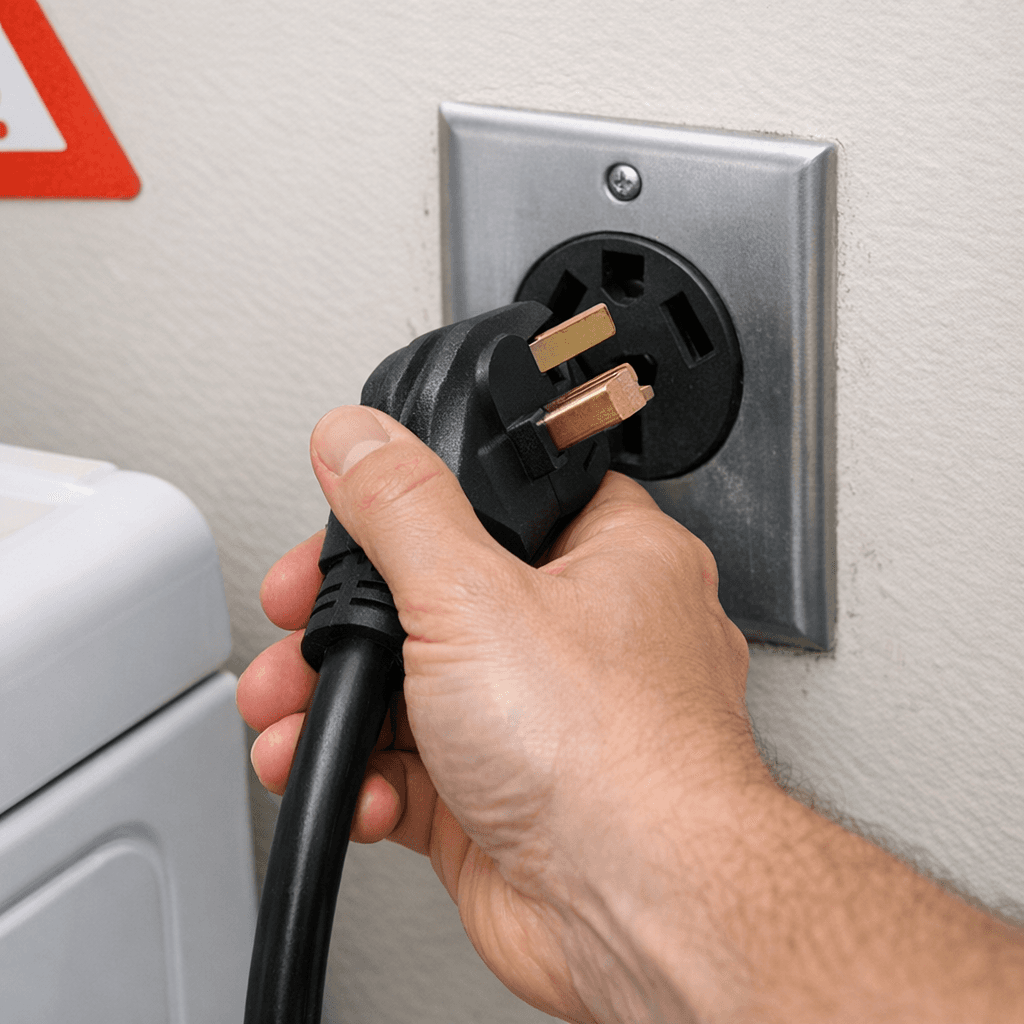
- The wall outlet, plug, or cord feels hot or looks discolored
- You cannot safely access the dryer to shut it off
Stop using the dryer and call a professional promptly if
- The burning smell returns each cycle (even if it's faint)
- Dry times are getting longer
- The outside vent flap barely opens while running
- The dryer cabinet feels abnormally hot
- You smell burning and also hear new squealing/grinding
A recurring burning smell from dryer is not "normal operation." It's a warning sign that a fix is needed.
For Florida service, call Air Duct & Chimney Services at 813-513-7861 or schedule at https://proairchimney.com/contact. Related service: /services/dryer-vent-cleaning.
Florida-Specific Risks
Florida homes have a few conditions that can make dryer odor issues more common—or more urgent to address.
High humidity can worsen lint and airflow problems
Humidity can make lint clump and stick inside sections of the vent (especially where the duct sags). That reduces airflow and increases heat retention, which can contribute to a dryer smells like burning complaint.
Coastal air can accelerate vent termination wear
In many parts of Florida, salty air can speed up corrosion at:
- Exterior vent hoods
- Fasteners
- Damper mechanisms
A damper that sticks closed (or barely opens) can behave like a blockage, overheating the dryer.
Pest and debris intrusion is common
Exterior terminations can become blocked by:
- Nesting material
- Debris blown by storms
- Lint mats that build up around the flap
If the outside vent can't exhaust freely, the dryer runs hotter and longer—raising dryer fire hazard risk.
Attic heat can amplify overheating
Vents routed through hot attic spaces may see higher overall temperatures. If airflow is already restricted, that extra heat can push the system into overheating territory faster.
DIY Safety Checks
These checks are meant to reduce risk and help you decide whether to stop and call a pro. If you ever see smoke or suspect electrical burning, skip DIY and get help.
1) Clean the lint screen the right way
- Remove lint after every load.
- If fabric softener sheets are used, occasionally wash the screen with warm water and mild soap, then fully dry it. (Residue can reduce airflow.)
2) Inspect the drum for foreign items
With the dryer off:
- Check for melted plastic, rubber, or crayon residue.
- Remove any visible debris.
If something melted, avoid scraping aggressively near holes or seals—damage can worsen performance.
3) Check airflow at the exterior vent hood
With the dryer running (only if safe and no smoke):
- Go outside and confirm the vent flap opens strongly.
- You should feel a steady stream of warm air.
- Weak airflow suggests restriction or a dryer vent blockage.
4) Look behind the dryer (carefully)
With the dryer off and unplugged:
- Make sure the transition hose isn't crushed.
- Watch for sharp bends and sagging.
- Avoid thin foil flex if present; it traps lint and is easily crushed.
If repositioning the dryer immediately recreates the smell when you run it again, stop and schedule an inspection.
5) Pay attention to smell type (quick triage)
- Hot lint / musty-hot: often lint accumulation + restriction.
- Rubber / "belt" smell: possible mechanical friction.
- Sharp electrical burn: stop use; electrical inspection is needed.
If you're unsure, treat it as a safety risk and get it checked.
6) Do not open the cabinet unless you are qualified
Internal components can remain hot and electrical hazards can exist even when "off." For gas units, improper handling can create additional safety risks.
If the smell persists after basic checks, schedule professional help: /services/system-inspections or /services/dryer-vent-cleaning.
Professional Inspection
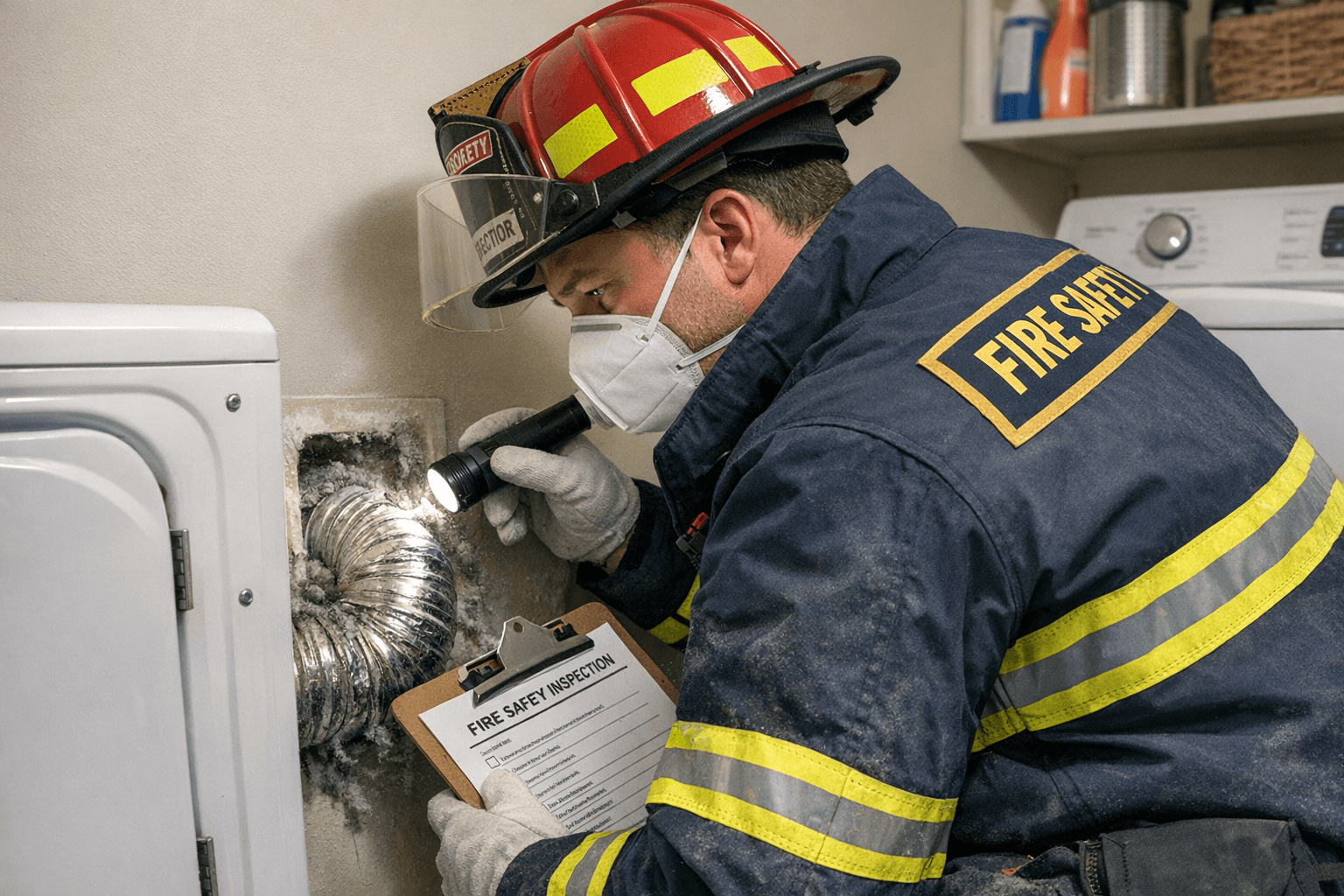
A recurring burning smell from dryer is one of the clearest reasons to have the full exhaust path inspected and cleaned—not just the lint screen.
What a professional dryer vent inspection typically covers
- Confirming the dryer is exhausting to the outside (not into an attic, crawl space, or garage)
- Checking the transition connection behind the dryer
- Inspecting vent material and routing (turns, length, sags, restrictions)
- Looking for signs of overheating (heat staining, melted lint, damaged fittings)
- Identifying an exterior termination that is stuck, blocked, screened, or damaged
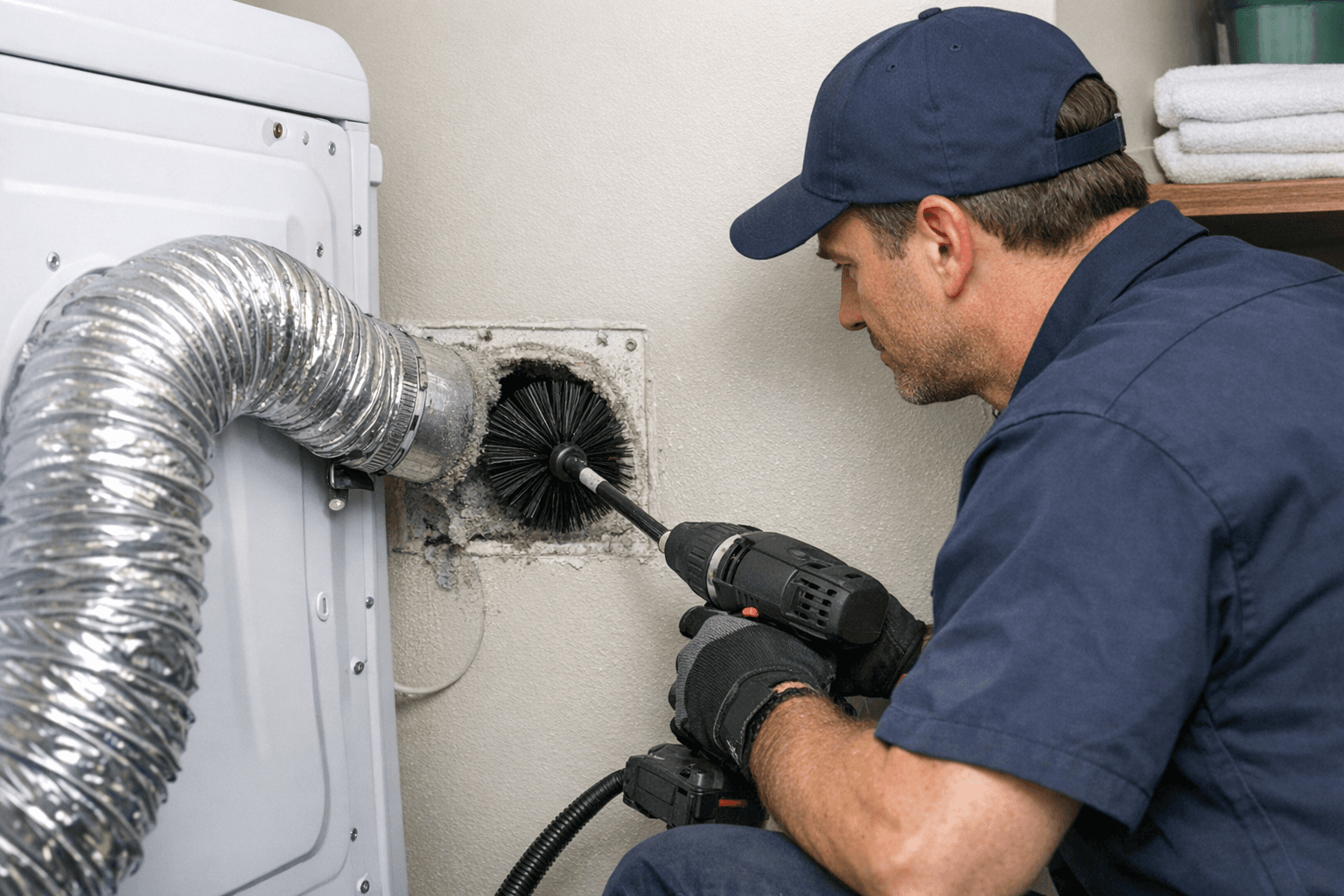
- Cleaning lint accumulation from the vent line
- Restoring airflow and confirming proper exhaust at the exterior
If a duct section is crushed, disconnected, or poorly routed, repair may be recommended. Related services:
- Dryer vent cleaning: /services/dryer-vent-cleaning
- Duct repair (when vent piping needs correction): /services/duct-repair
- Full system inspection: /services/system-inspections
What to expect from Air Duct & Chimney Services
- Clear scope before work begins
- Practical recommendations (cleaning vs. repair when needed)
- Focus on airflow and safety, not upsells
To schedule in Florida, call 813-513-7861 or book at https://proairchimney.com/contact.
Beware the "$99 vent cleaning" bait-and-switch
Florida homeowners regularly report ultra-low advertised prices that turn into:
- High-pressure add-ons
- "Mandatory" fees that weren't disclosed
- Vague claims without proof (no airflow readings, no before/after documentation)
A proper dryer vent cleaning is real work. Be cautious with $99 specials that don't clearly define the full vent run, the termination, and verification of airflow.
Cost in Florida
For most homes, dryer vent cleaning in Florida typically ranges from $100-$175.
What can affect where you fall in that range:
- Vent length and number of turns
- How accessible the vent route is
- Amount of lint accumulation
- Condition of the exterior termination (stuck damper, blockage)
If the vent line is damaged or improperly installed, cleaning may not be enough—repairs may be recommended separately. If you're already dealing with a dryer vent blockage or repeat overheating odors, it's usually more cost-effective to address it promptly than to keep running cycles.
To get a straightforward quote and schedule, call 813-513-7861 or visit https://proairchimney.com/contact. Service details: /services/dryer-vent-cleaning.
Prevention
Most burning-odor calls start with restricted airflow and lint accumulation. These habits reduce the chance of a lint fire and keep drying times stable.
Every load
- Clean the lint screen completely.
- Don't overload the drum (overloading restricts airflow and increases heat).
Monthly
- Check the outside vent flap for strong airflow while running.
- Make sure the flap closes after the cycle (to reduce pests and humidity intrusion).
Every 6-12 months (sooner if you dry heavily)
- Schedule professional dryer vent cleaning, especially if:
- Dry times increase
- Clothes feel hotter than usual
- You notice repeated "hot lint" odors
- Your vent run is long or has multiple turns
Smart setup tips
- Prefer rigid or semi-rigid venting where possible for smoother airflow and less lint trapping.
- Keep the transition as short and straight as possible (without crushing it).
- Avoid terminations that clog easily or restrict exhaust.
- If your dryer is in a tight closet or small laundry room, maintain clearances so the unit isn't overheating from poor ventilation around it.
If you want a safety-focused evaluation, schedule a visit: /services/system-inspections.
Related Services
Service Areas
Get Your Dryer Checked Today
If you're noticing a burning smell from your dryer—even if it seems intermittent—don't wait for it to become a fire hazard.
Call Air Duct & Chimney Services at 813-513-7861 or schedule online.
FAQs
Q: Why is there a burning smell from my dryer but no smoke? A: A burning smell without smoke often points to overheating from restricted airflow (lint buildup or a dryer vent blockage) or mechanical friction (belt/roller/idler). Even without smoke, these conditions can escalate. Stop using the dryer if the odor repeats and have the venting inspected and cleaned.
Q: Can lint really cause a dryer fire hazard? A: Yes. Lint is combustible, and when it collects near heat sources or restricts exhaust, temperatures can rise quickly. That's why routine vent maintenance matters—especially when you notice longer dry times or a dryer smells like burning odor.
Q: What does an electrical burning smell indicate? A: An electrical burning odor can indicate overheating wiring, a failing terminal connection, or component issues. Do not keep running the dryer to "see if it clears." Turn it off/unplug it and arrange inspection.
Q: Why does my dryer smell like burning only with heavy loads? A: Heavy loads restrict airflow through the drum and can push a marginal vent system over the edge. If the vent is partially restricted, heavy loads may trigger higher heat and odor while smaller loads appear "fine." That's a common pattern with developing dryer vent blockage.
Q: How long should dryer vent cleaning take? A: It depends on vent length, number of turns, and lint buildup. The important part is not the clock—it's that the full vent path is addressed and airflow is verified at the exterior termination.
Q: What is a fair price range for dryer vent cleaning in Florida? A: In Florida, a typical range is $100-$175. Be cautious with $99 offers that rely on upsells or don't clearly include the full vent run and airflow verification.
Q: When should I call Air Duct & Chimney Services? A: Call if you have a recurring burning smell from dryer, longer dry times, weak exterior airflow, or suspected vent restriction, crushed ducting, or termination issues. Schedule at https://proairchimney.com/contact or call 813-513-7861.