What Is Creosote? A Florida Homeowner Guide to Chimney Safety
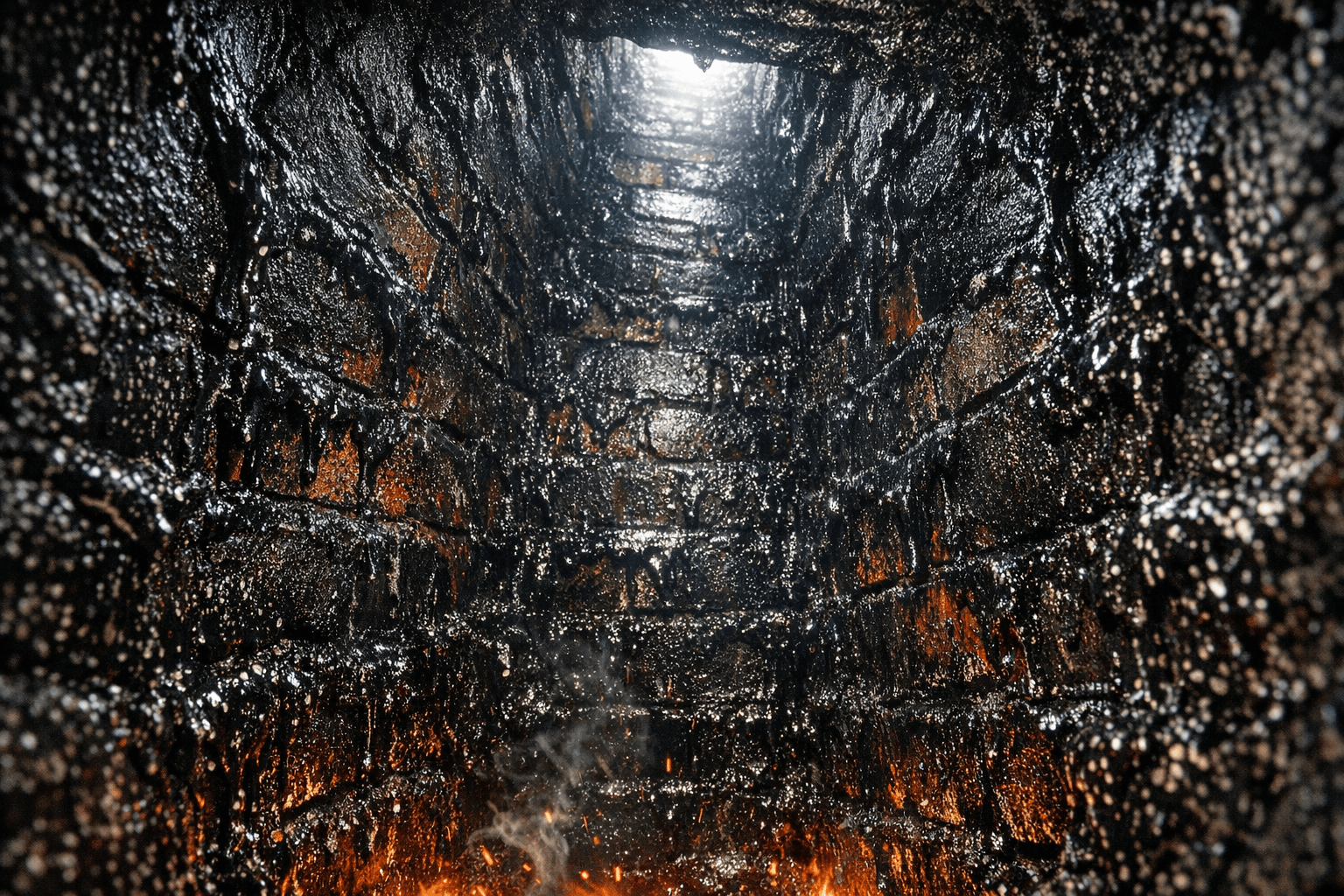
Creosote is a dark, sticky (or crusty) residue that forms inside a chimney or flue when wood smoke cools and condenses on the liner. If it's allowed to accumulate, it can ignite and contribute to a chimney fire.
In Florida, many fireplaces see intermittent use (a few cool nights, holiday gatherings, or occasional ambiance fires). That "every now and then" use can still produce creosote—especially if the fire burns cool, the wood is not fully seasoned, or the chimney doesn't draft well.
This guide explains what is creosote, how it forms, the 3 stages of buildup, warning signs, and what safe, professional removal looks like.
Need help in Florida? Call Air Duct & Chimney Services at 813-513-7861 or schedule an estimate at https://proairchimney.com/contact.
Table of Contents
- What creosote is (and what it isn't)
- Why creosote forms in chimneys
- The 3 stages of creosote buildup
- Creosote dangers: why buildup matters
- Warning signs of creosote buildup
- How creosote is removed (safe options)
- Cleaning costs in Florida (realistic ranges)
- How to reduce creosote in the future
- Avoiding $99 bait-and-switch "chimney cleaning" scams
- When to schedule a chimney inspection in Florida
- FAQ
- Sources
What creosote is (and what it isn't)
Creosote is a byproduct of burning wood. It's made up of unburned gases, tar vapors, and fine particles that leave the firebox with smoke. When those hot byproducts hit a cooler chimney surface, they condense and stick.
Creosote inside a chimney can look like:
- Sooty dust (black or gray powder)
- Flaky crust (brittle chips)
- Sticky tar (dark, shiny, hard-to-scrape glaze)
What creosote is not:
- Normal fireplace ash (light, dusty, stays mostly in the firebox)
- Water stains from rain intrusion (often brownish streaks or damp areas)
- Rusty damper residue (more orange/brown, metallic smell)
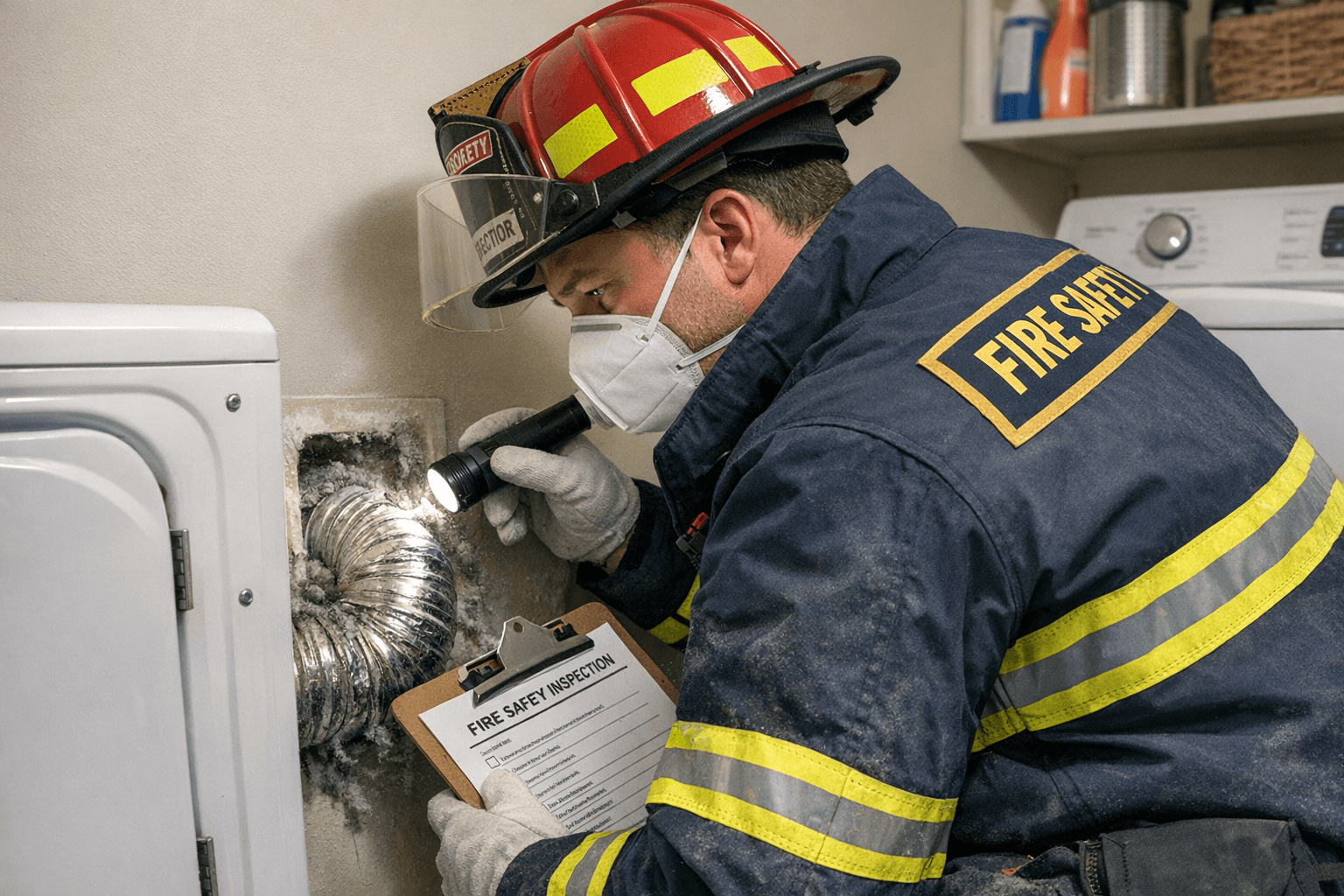
If you're unsure what you're seeing, an inspection can confirm whether it's creosote or another issue. If you're looking for a full checkup approach (not just sweeping), see /services/system-inspections.
Why creosote forms in chimneys
Creosote forms when smoke cools before it fully exits the flue. The main drivers are cool fires, cool chimney surfaces, and restricted airflow.
Common reasons a Florida chimney builds creosote:
- Unseasoned or damp wood Wet wood burns cooler and creates more smoke and vapor—prime conditions for deposits.
- Smoldering fires (closing the air too much) Low oxygen = incomplete combustion = more smoke particles and tars.
- Short burn times / low flue temperatures Quick "cozy" fires may never heat the chimney enough to keep vapors from condensing.
- Chimney drafting problems Blockages, liner issues, or poor chimney design can slow smoke movement and increase deposits.
- A cold chimney at start-up Early in the burn, the flue is coolest—often when the most condensation happens.
Creosote isn't a "time-based" problem. It's a condition-based problem: if your chimney is accumulating deposits, cleaning is needed—if it isn't, it may not be.
The 3 stages of creosote buildup
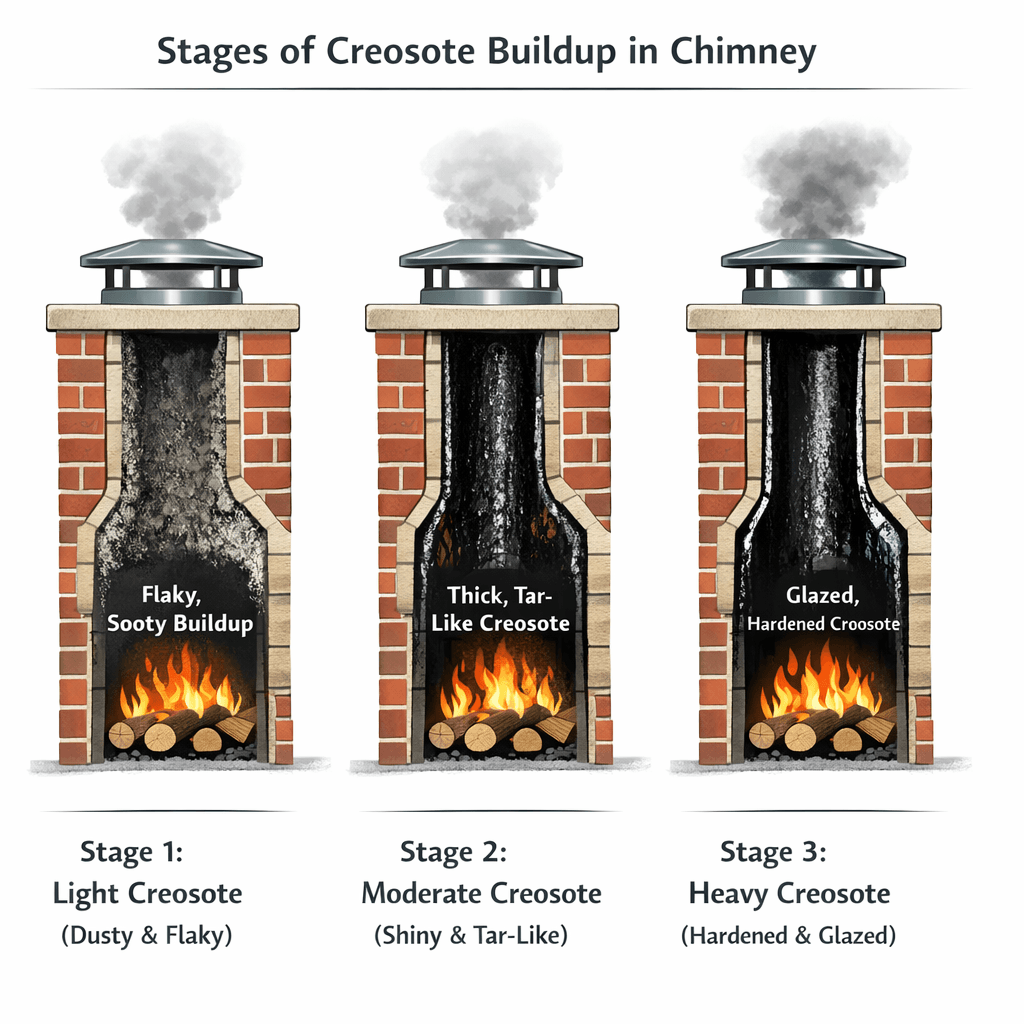
Not all creosote is the same. Professionals typically describe three stages, based on appearance and how difficult it is to remove.
Stage 1: Soot (light, powdery deposits)
- Looks like: Black/gray dust
- Typical cause: Normal wood burning with some incomplete combustion
- Risk level: Lower than later stages, but still combustible
- Removal: Often removable with standard brushing during a sweep
Stage 2: Flaky or crunchy creosote (hardened, layered deposits)
- Looks like: Brittle flakes or crunchy "cornflake" texture
- Typical cause: Cooler fires, frequent smoldering, or draft limitations
- Risk level: Higher—more fuel available in the flue
- Removal: May require more aggressive brushing or specialty tools
Stage 3: Glazed creosote (shiny, tar-like, very hard)
- Looks like: Dark, shiny, hardened glaze (sometimes like drips or glassy coating)
- Typical cause: Long-term accumulation, repeated cool-smoke cycles, and condensation
- Risk level: Highest—hard deposits can burn intensely and are difficult to remove
- Removal: Often requires specialized methods and may take more than a basic sweep
If you suspect Stage 2 or Stage 3, it's worth having a qualified chimney pro evaluate it rather than attempting DIY removal.
Creosote dangers: why buildup matters
Creosote is dangerous because it is combustible and sits in the exact place where heat and flame can reach it: the flue pathway.
Key risks of creosote buildup:
- Chimney fire risk Creosote can ignite, and a chimney fire can damage liners, masonry, caps, and nearby building materials.
- Reduced draft and smoke spillage Deposits narrow the flue, which can push smoke back into the home.
- More odor and indoor irritation Creosote odors can be strong—especially in humid Florida weather or after rain events that add moisture to the system.
- Hidden damage A dirty chimney can mask cracked liners, failed mortar joints, or deteriorated components.
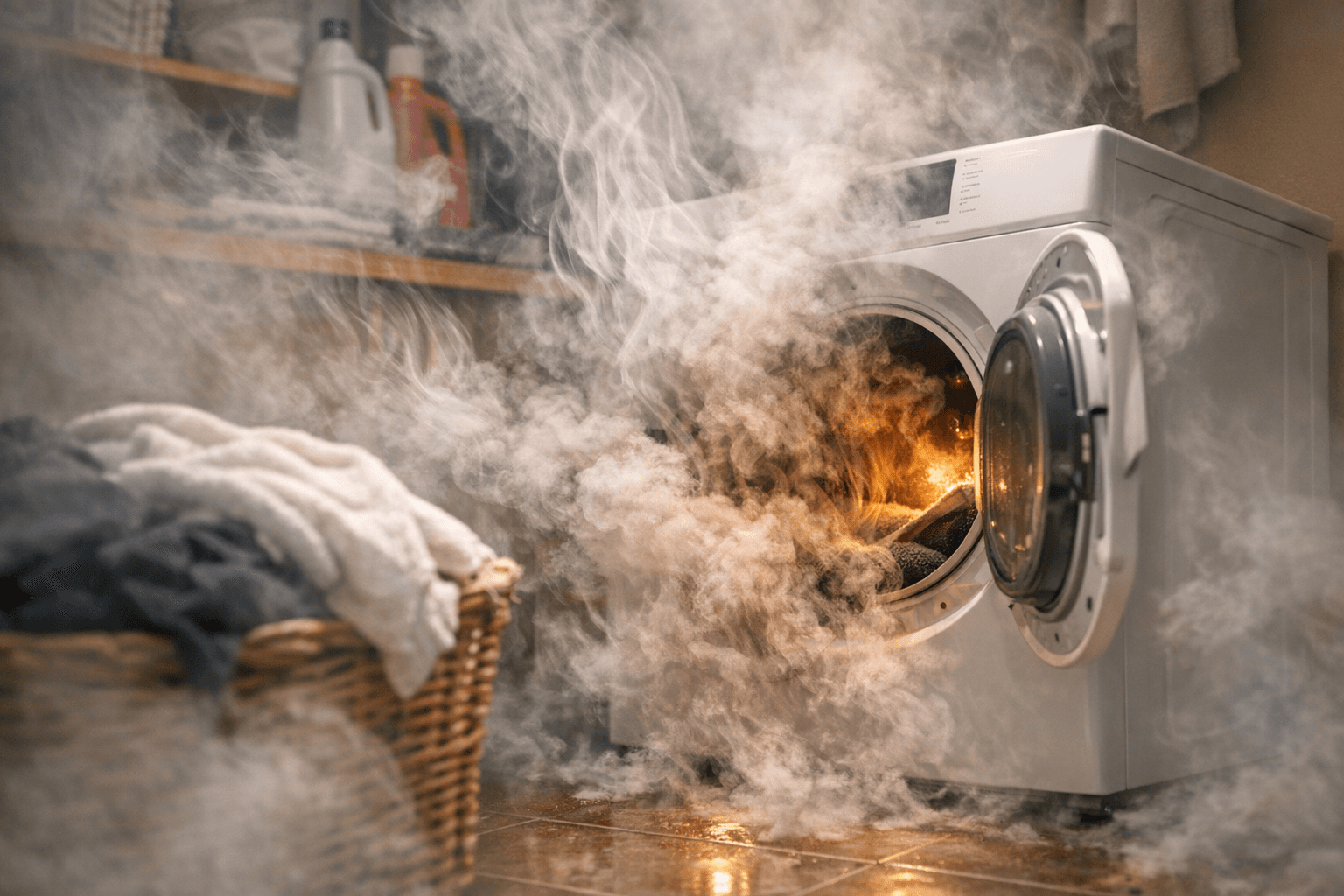
If a chimney fire is suspected at any point (loud roaring, excessive smoke, intense odor, flakes in the firebox), stop using the fireplace and arrange a professional inspection before using it again.
For repairs that may be discovered during an inspection, see /services/chimney-repairs.
Warning signs of creosote buildup
You can't reliably judge creosote by looking only at the firebox. Many deposits accumulate higher up in the flue. Still, these warning signs are common:
- Strong smoky or "tar" odor from the fireplace, even when not in use
- Black, flaky debris falling into the firebox
- Smoke entering the room when starting a fire or during windy conditions
- A lazy, weak draft (fires struggle to burn cleanly)
- Visible black buildup around the damper area
- More soot on doors/glass (for wood stoves) than usual
- After using slow, smoldering fires repeatedly
If you're seeing these signs, a chimney cleaning may be appropriate. Learn more about service options at /services/chimney-cleaning.
Quick Florida CTA: If you want a straightforward evaluation and an honest cleaning recommendation (not a high-pressure upsell), call Air Duct & Chimney Services at 813-513-7861 or book at https://proairchimney.com/contact.
How creosote is removed (safe options)
Creosote removal should match the type and severity of buildup. A responsible company won't treat every chimney the same.
Typical professional approaches include:
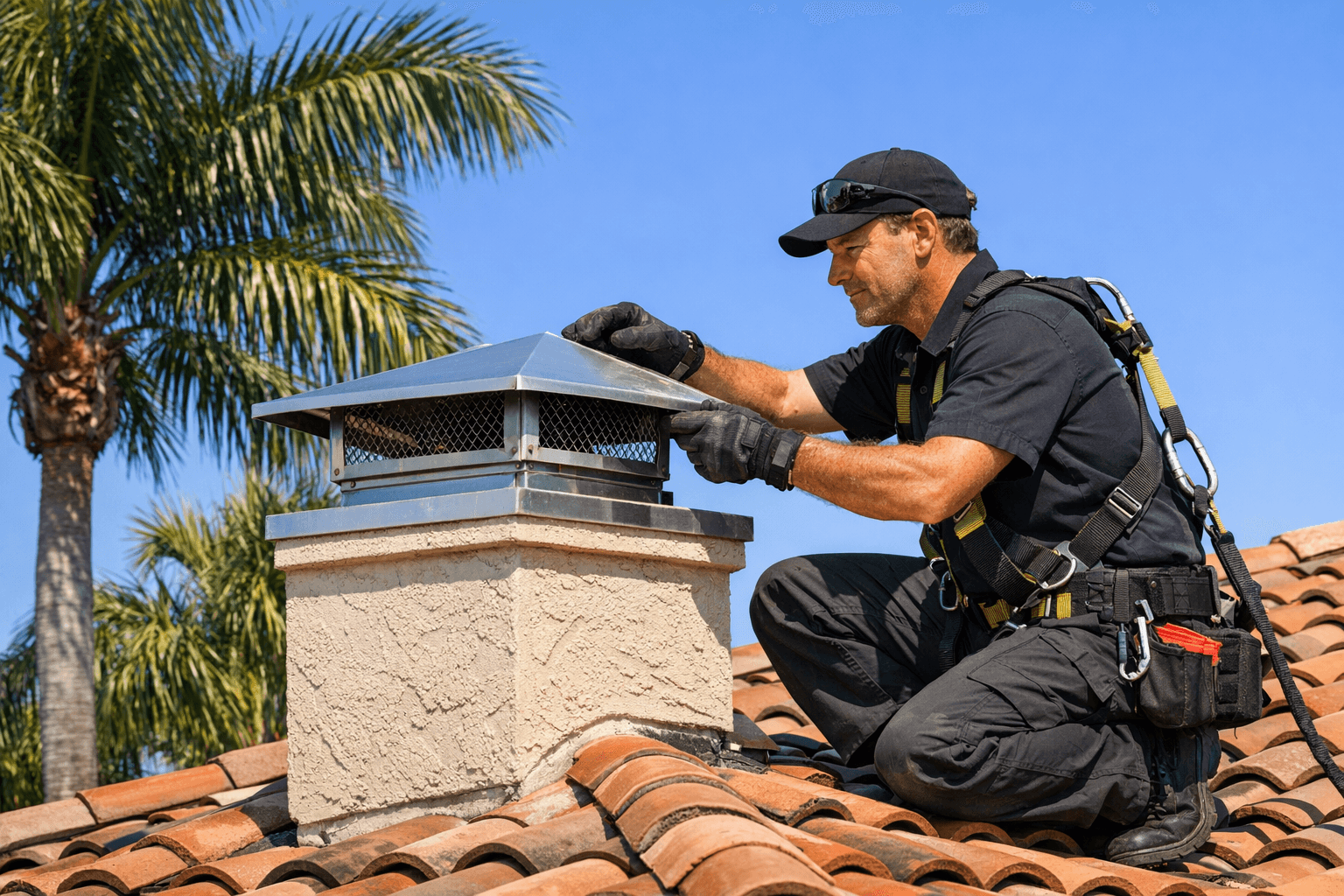
- Inspection first (visual assessment of accessible areas) Helps identify deposit type, draft issues, and safety concerns.
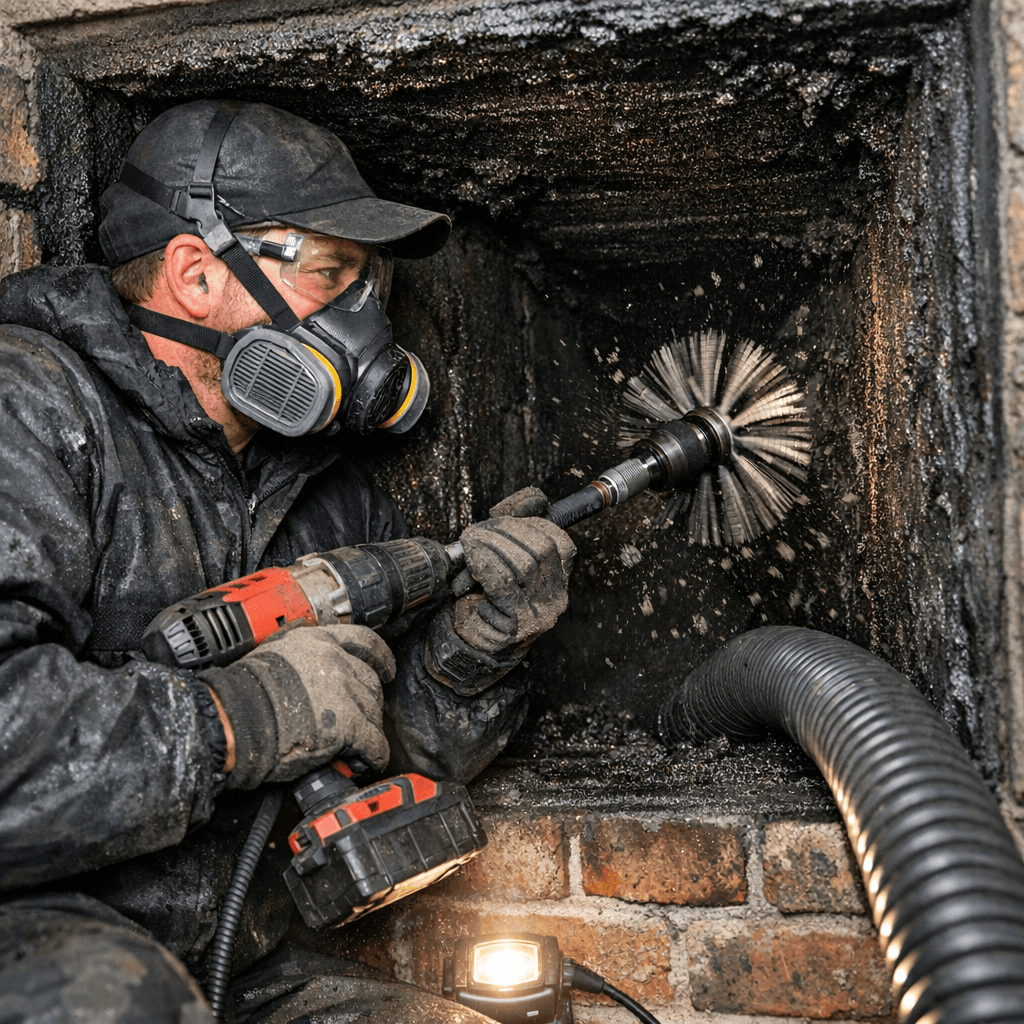
- Mechanical sweeping (brushes sized to the flue/liner) Common for Stage 1 and many Stage 2 situations.
- Targeted tools for heavier deposits Used when deposits are layered or stubborn.
- Recommendations for glazed creosote Stage 3 may require specialty removal processes and, in some cases, evaluation of liner condition and overall system performance.
What to avoid:
- DIY scraping or harsh chemicals without understanding the liner type and deposit stage You can damage liners, create a mess throughout the home, or fail to remove the most dangerous deposits.
- "Guaranteed in 15 minutes" cleanings Real cleaning takes time, setup, and containment to protect your home.
If your inspection uncovers installation or component issues, review /services/chimney-installation and /services/chimney-repairs for next steps.
Cleaning costs in Florida (realistic ranges)
For Florida homeowners, a realistic budget range is:
- Chimney cleaning/inspection: $150–$300
- Chimney repair: varies by scope (liner issues, masonry repairs, caps, crown work, damper problems, and more)
Be cautious with prices far below the typical range. Extremely low advertised prices often lead to aggressive add-ons once the crew arrives.
To schedule a service visit, use /contact.
How to reduce creosote in the future
You can't eliminate creosote entirely when burning wood, but you can reduce buildup and help your system draft cleaner.
Practical steps:
- Burn properly seasoned wood Drier wood burns hotter and cleaner.
- Avoid long smoldering burns Give fires enough airflow for a bright, active flame.
- Warm the flue at start-up A stronger initial draft can reduce early condensation inside the chimney.
- Use the right fuel and don't burn trash Household waste can increase residue and introduce corrosive byproducts.
- Address draft problems Caps, liner sizing, and obstructions can all affect airflow.
- Clean when needed The right interval depends on use, wood quality, and how the system performs.
If you'd like a broader home airflow/safety check (especially if you also use vented appliances), consider /services/system-inspections.
Avoiding $99 bait-and-switch "chimney cleaning" scams
Florida homeowners regularly report ultra-low "specials" that turn into high-pressure sales visits. A common pattern:
- Ad says: "$99 chimney sweep"
- On site: a quick glance
- Then: urgent claims, inflated pricing, or "required" treatments you didn't request
How to protect yourself:
- Ask what's included: inspection level, sweeping method, and what parts of the system are actually cleaned
- Get pricing ranges up front for common add-ons (caps, minor repairs, etc.)
- Avoid fear-based sales that demand immediate expensive work without documentation
- Request photos of issues when possible (before/after and problem areas)
A legitimate provider will explain findings clearly and recommend cleaning when needed, not based on a one-size-fits-all schedule.
When to schedule a chimney inspection in Florida
Schedule an inspection when any of the following applies:
- You're using the fireplace again after a long break
- You notice odor, smoke spillage, or falling debris
- You've had a roof leak, storm event, or water intrusion near the chimney
- You changed how you burn (different wood, more frequent use, longer burns)
- You suspect prior work was incomplete or you received a suspicious low-price offer
If you need service, Air Duct & Chimney Services can help Florida homeowners get clarity without guesswork:
- Call 813-513-7861
- Schedule: https://proairchimney.com/contact
You can also view service coverage at /service-areas.
FAQ
What is creosote made of?
Creosote is made from condensed smoke byproducts—tars, unburned gases, and fine particles—that stick to the chimney liner as the flue gases cool.
Is creosote always dangerous?
Any creosote is combustible, but risk increases as deposits get thicker and more hardened. Glazed (Stage 3) creosote is generally considered the highest concern because it can burn intensely and is difficult to remove.
How fast does creosote build up in a chimney?
It depends on how you burn: wood moisture, airflow, and fire temperature matter more than calendar time. Cool, smoldering fires and damp wood can accelerate buildup.
Can I remove creosote myself?
Light soot in the firebox can be cleaned carefully, but creosote in the flue is difficult to assess and remove safely without proper tools and containment. A professional inspection is the safest way to confirm buildup stage and the right removal method.
How much does chimney cleaning cost in Florida?
Typical chimney cleaning/inspection pricing is $150–$300. Chimney repairs vary by scope based on what's found during the inspection.