Dryer Takes Too Long to Dry? Top Causes and Fixes
If your dryer takes too long to dry, the most common reason is restricted airflow—often from a dryer vent clogged with lint buildup, a crushed/too-long duct run, or a blocked exterior vent hood. In Florida, high humidity can also extend drying times, especially with heavy towels. Start with simple checks (lint screen, vent flap airflow, duct condition). If clothes still need multiple cycles or the dryer area feels unusually hot, call Air Duct & Chimney Services at 813-513-7861.
Table of Contents
- Common Causes
- Florida-Specific Factors
- DIY Troubleshooting
- When to Call a Professional
- Professional Vent Cleaning Process
- Cost in Florida
- Prevention Tips
- FAQs
Common Causes
A slow dryer usually comes down to one of two problems: air can't move, or heat isn't being produced/retained. The items below are the most common reasons a dryer is not drying clothes well.
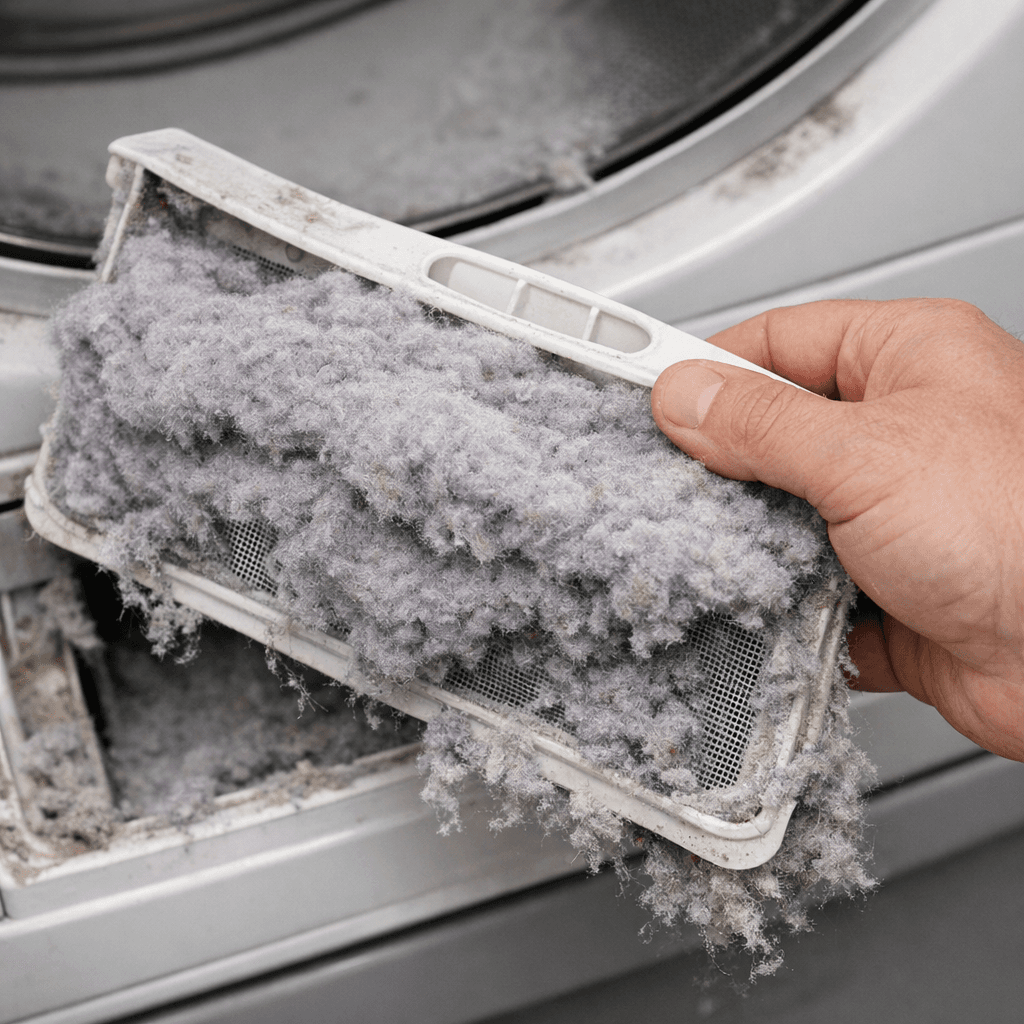
1) Lint screen and lint screen housing buildup
Even with a clean-looking lint screen, residue can block airflow.
What you may notice
- Loads take longer than normal
- The lint screen seems "waxy" or doesn't pass water through easily
- The dryer feels hotter on the outside than it used to
Practical fix
- Clean the lint screen every load.
- Wash the screen occasionally with warm water and a small amount of dish soap, then fully dry it.
- Vacuum lint from the lint screen slot (with the dryer unplugged).
2) Dryer vent clogged with lint buildup (most common airflow problem)
A partially blocked vent can still "vent," but not enough. This forces longer cycles and can overheat the dryer.
What you may notice
- Clothes feel hot but still damp
- The laundry room feels warmer or more humid during drying
- Weak airflow at the outside vent hood
- A burning smell (stop using the dryer and address immediately)
Practical fix
- Check the exterior vent flap for strong airflow and full opening.
- If airflow is weak, professional service is usually the safest, most thorough option: /services/dryer-vent-cleaning
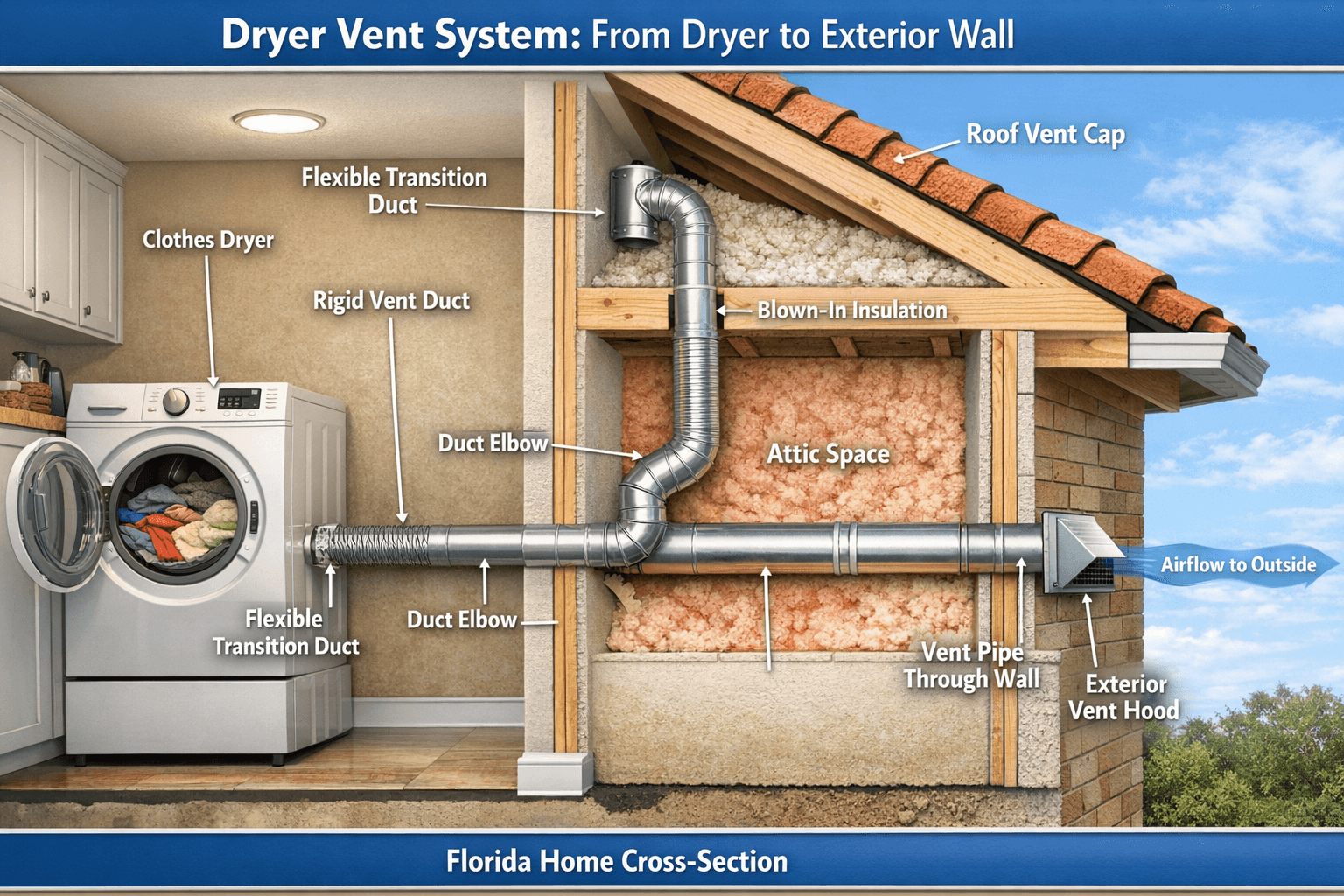
3) Crushed, kinked, sagging, or overly long vent duct
Even if the vent is "clean," a crushed duct can act like a blockage. Long runs and multiple elbows slow airflow.
Common causes
- Dryer pushed too close to the wall
- Thin foil-style ducts that deform easily
- Ducts that sag and create lint "pockets"
Practical fix
- Reposition the dryer to avoid crushing the duct.
- Use rigid metal ducting where possible and keep the run as short/straight as practical.
- If the duct is damaged or poorly routed, consider professional repair: /services/duct-repair
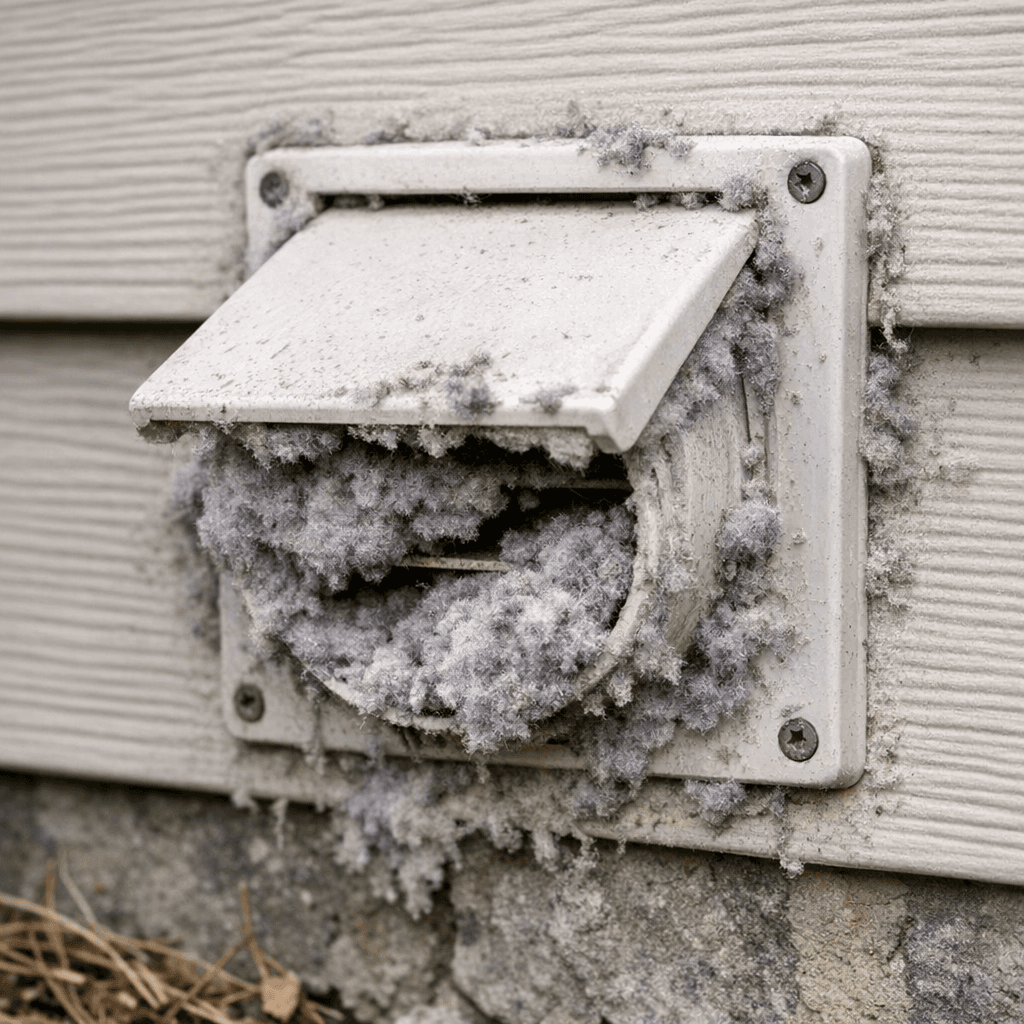
4) Exterior vent hood blocked, stuck, or screened incorrectly
Lint, pests, and debris can clog the termination point outside.
What you may notice
- Flap doesn't open while the dryer runs
- Lint "snow" collects around the vent
- Visible nesting material or debris
Practical fix
- Clear visible debris at the hood (avoid pushing debris deeper into the duct).
- If the hood is high, on a roof line, or hard to reach safely, a pro cleaning/inspection is the better route.
5) Overloading and fabric choices
Heavy loads restrict tumbling and airflow through clothes. Some fabrics (towels, jeans) hold moisture longer.
What you may notice
- One or two items stay damp in a full load
- Towels take multiple cycles
Practical fix
- Reduce load size.
- Separate heavy items from lighter items.
- Use the correct cycle for fabric type.
6) Moisture sensor contamination
Auto-dry cycles rely on sensor bars that can be coated by dryer sheets or residue, causing the dryer to stop too soon or run inefficiently.
What you may notice
- Auto cycles end early but clothes are damp
- Timed dry works better than sensor dry
Practical fix
- Wipe sensor bars with rubbing alcohol (with the dryer off and cool).
- Reduce dryer sheet use if residue keeps returning.
7) Heat production problems (electric or gas)
If airflow is good but drying is still slow, the dryer may not be heating properly.
What you may notice
- Clothes come out cool or lukewarm
- Cycle runs but drying barely improves
Practical fix
- This is typically a dryer-appliance repair issue (heating element, gas igniter, thermostats).
- Still, confirm venting is correct first—restricted venting can contribute to overheating shutoffs and poor performance.
8) Exhaust fan backdraft or negative pressure in the home
Some homes can develop negative pressure that reduces exhaust performance.
What you may notice
- Dryer performance changes when certain fans run (bath/kitchen exhaust)
- Exterior flap barely moves during operation
Practical fix
- Improve airflow pathways (avoid tightly sealed doorways blocking makeup air).
- A full venting and airflow check can help pinpoint the cause: /services/system-inspections
Florida-Specific Factors
Florida conditions can make a dryer seem "worse," even when the appliance is working.
High humidity slows evaporation
When indoor humidity is high, removing moisture from fabrics can take longer—especially with towels, bedding, and beach gear. If your dryer is venting poorly, humidity makes the problem more obvious.
Heat in garages, closets, and utility rooms
Many Florida homes place laundry equipment in warm spaces. Extra ambient heat can stress the dryer and make vent problems show up faster (hot laundry room, longer cycles).
Salt air and corrosion (coastal areas)
Coastal air can speed up corrosion on exterior vent hoods and fasteners, which may lead to stuck flaps, partial blockages, or damaged terminations.
Pests and nesting at exterior vents
Warmth and shelter attract birds and small animals. Nesting material can block airflow quickly.
Condos and multi-family vent runs
Some buildings have longer duct runs, shared chases, or hard-to-access terminations. Long, complex routing makes lint accumulation and airflow loss more likely, and it raises the importance of a proper inspection before cleaning.
DIY Troubleshooting
Use this checklist to narrow down why your dryer takes too long to dry. Stop if anything feels unsafe, or if you suspect a major blockage, overheating, or damaged wiring.
Step 1: Confirm the basics (fast wins)
- Clean the lint screen completely.
- Run a smaller test load (3-5 lightweight items).
- Try a timed dry cycle to compare results vs. sensor dry.
Step 2: Check airflow at the exterior vent hood
- Turn the dryer on (heat cycle).
- Go outside to the vent termination.
- Look for:
- Strong airflow
- The flap opening fully
- No rattling, scraping, or obstruction
If airflow is weak: the vent line may be restricted, crushed, or clogged with lint buildup.
Step 3: Inspect behind the dryer (with power off)
- Unplug the dryer (and shut off gas if applicable).
- Carefully pull the dryer out without stretching or crushing the duct.
- Check for:
- Kinks/crush points
- Excess duct length coiled behind the dryer
- Loose connections leaking lint into the room
Tip: If you see foil or plastic-style venting, upgrading to safer metal venting and correcting routing can improve drying speed and reduce lint accumulation.
Step 4: Clean the lint screen housing area
- Vacuum the lint screen slot carefully.
- Remove visible lint around the door seal and drum edge.
Step 5: Clean moisture sensors (if auto cycles act strange)
- Locate the sensor bars inside the drum (often near the lint screen area).
- Wipe with rubbing alcohol and a clean cloth (dryer off and cool).
Step 6: Know when DIY should stop
DIY is fine for surface lint and obvious kinks. It is not ideal when:
- The vent run is long, routed through walls/ceilings, or ends at a roof line
- The outside termination is hard to reach
- You suspect heavy lint buildup deep in the line
- The dryer is overheating or you smell burning
At that point, professional cleaning and inspection is the safest path: /services/dryer-vent-cleaning
When to Call a Professional
Call for service when performance problems are persistent, safety signs appear, or the vent system is complex.
Clear signs you should schedule service
- Clothes need more than one cycle regularly
- The laundry room becomes noticeably hot or humid during drying
- Weak airflow outside at the vent hood
- Visible lint discharge or debris at the termination
- The dryer shuts off mid-cycle (possible overheating protection)
- Burning smell or scorching hot exterior surfaces (stop using the dryer and address immediately)
Situations where professional tools matter
- Hidden duct runs through walls, ceilings, or attic spaces
- Long runs or multiple elbows (more places for lint buildup)
- Rooftop or high exterior terminations
- Multi-family or condo vent routing
- Suspected duct damage requiring correction: /services/duct-repair
Booking options
For Florida dryer vent troubleshooting and cleaning, contact Air Duct & Chimney Services:
- Call 813-513-7861
- Schedule via /contact (online request form: https://proairchimney.com/contact)
Professional Vent Cleaning Process
A proper professional cleaning focuses on airflow restoration and system condition, not just "blowing some lint around."
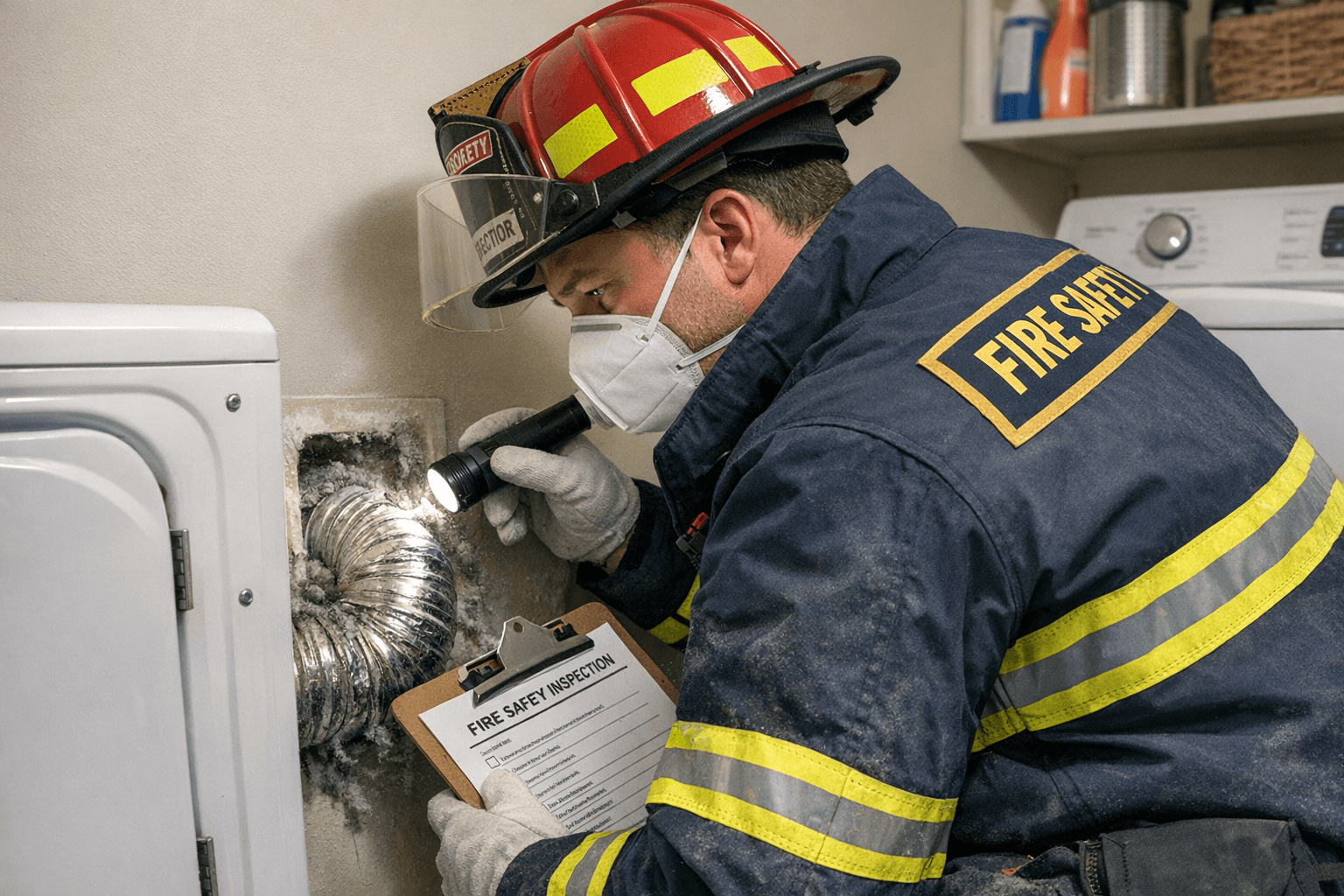
1) Inspection first (to confirm what's actually wrong)
A tech should identify:
- Duct material and routing
- Crushed sections, disconnected joints, or leaks
- Termination condition (flap, guard, obstruction)
- Evidence of heavy lint buildup or moisture issues
For a deeper assessment, inspections can be combined with a broader system check: /services/system-inspections
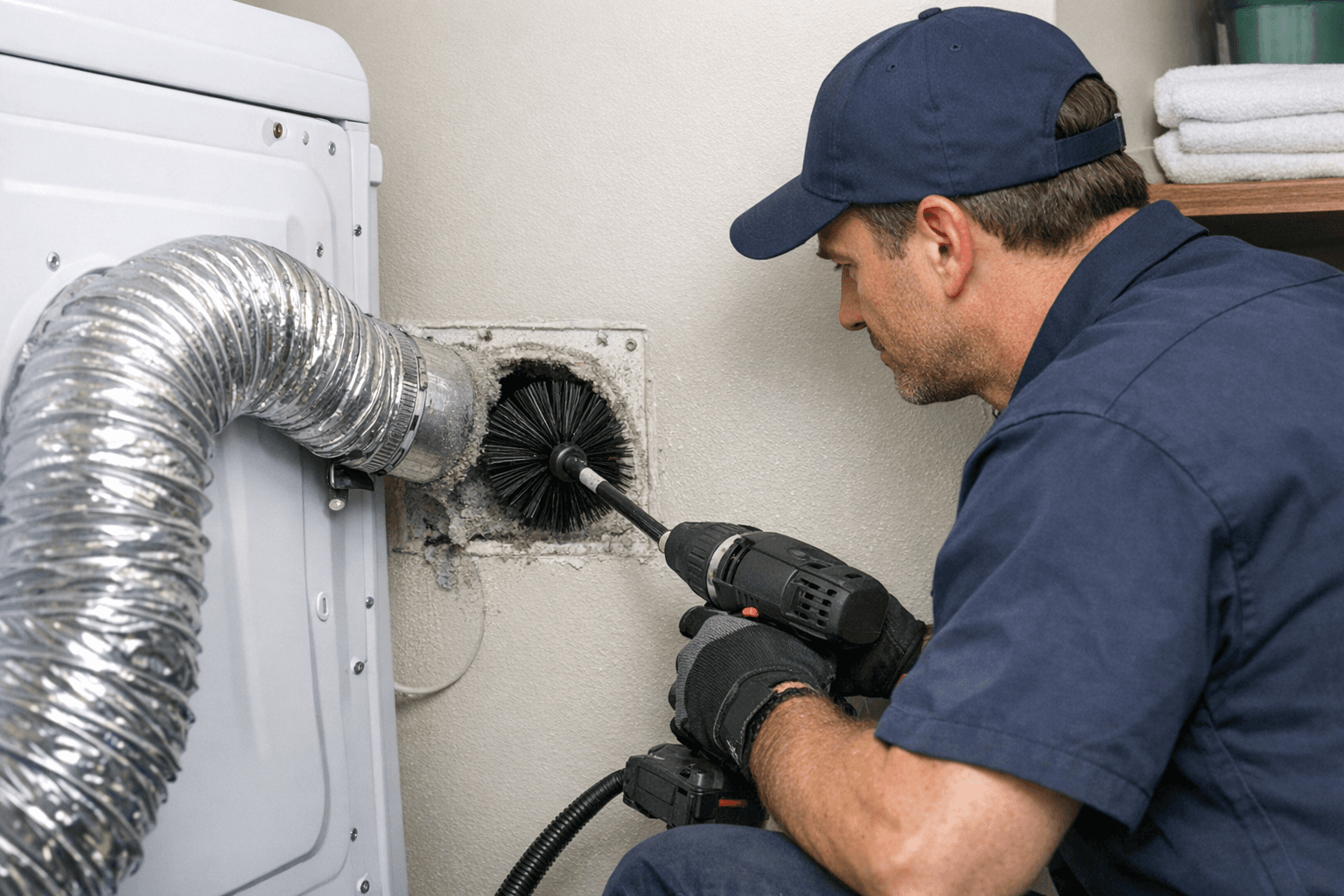
2) Controlled lint removal through the full run
A quality process typically includes:
- Disconnecting the dryer safely
- Mechanical agitation (brushes/rotary tools as appropriate)
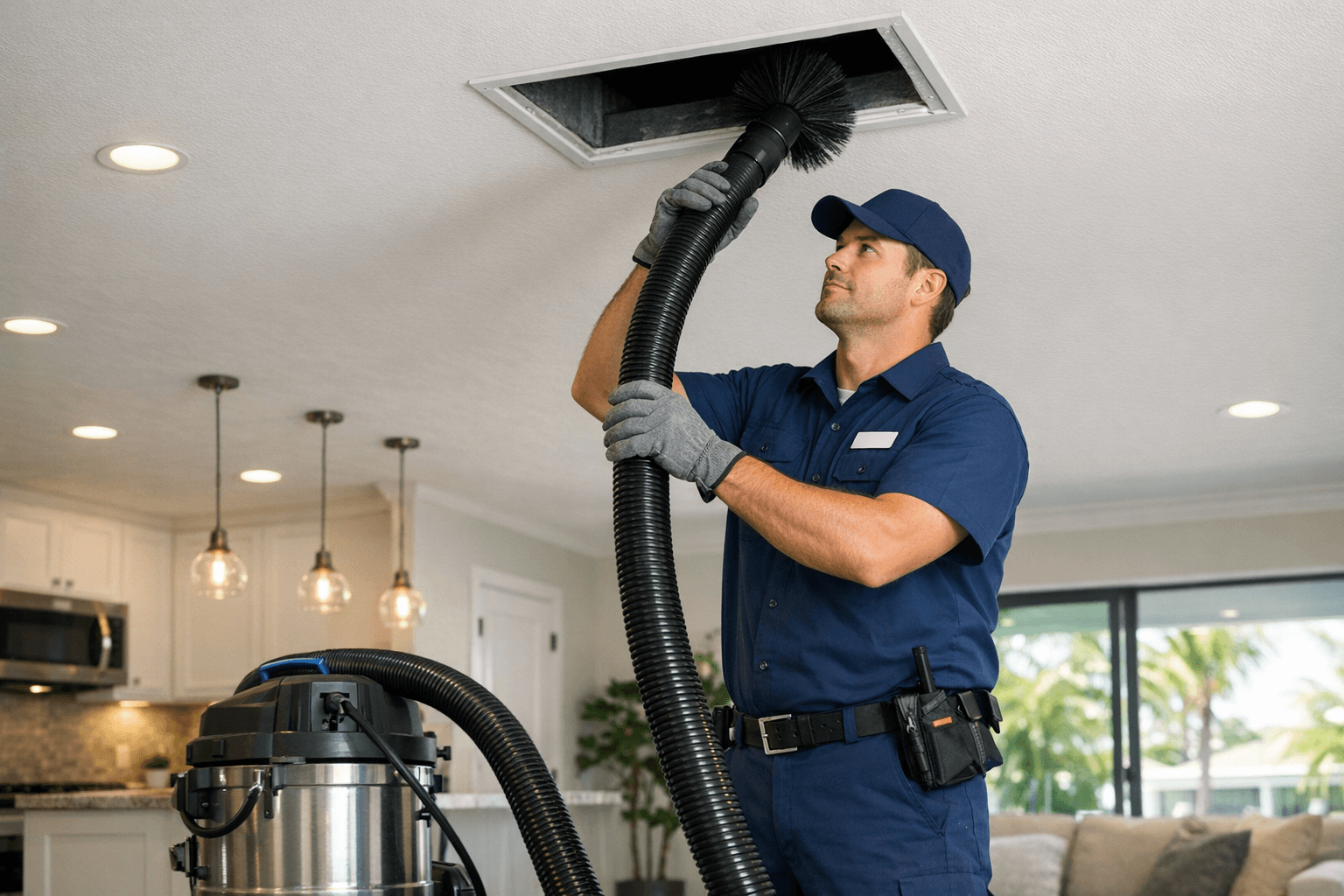
- Professional vacuum collection to reduce indoor lint spread
- Cleaning the termination point so the flap opens freely
3) Reconnection and airflow verification
After cleaning, the tech should:
- Reconnect securely
- Reduce unnecessary slack and sharp bends where possible
- Confirm improved airflow and proper termination operation
4) Repair recommendations when needed
Cleaning helps when lint buildup is the issue. If the duct is unsafe or poorly installed, correcting it can be the real fix. If repairs are needed, start here: /services/duct-repair
Cost in Florida
For Florida homes, professional dryer vent cleaning typically costs $100-$175. Final pricing depends on access, vent length, number of bends, and how restricted the line is.
What affects cost
- Vent length and routing: longer runs and multiple elbows take more time
- Access: tight laundry closets, attics, or high exterior terminations
- Severity of lint buildup: heavy compaction requires more passes and verification
- Termination issues: stuck flaps, pest nesting, or damaged hoods may need correction
Warning about $99 "too-good-to-be-true" offers (bait-and-switch)
Be cautious with extremely low advertised prices (like $99 specials) that can turn into expensive add-ons once the crew arrives. Common bait-and-switch patterns include:
- "Base price" that excludes the actual vent line
- Unexpected fees for "deep cleaning," "main line," or "heavy lint"
- High-pressure upsells without showing evidence of a real blockage
How to protect yourself
- Ask for the scope in writing (what is included: full run to exterior termination, reconnection, verification).
- Request clear proof of need for add-ons (photos, airflow/condition explanation).
- Avoid anyone who won't explain the vent path or termination condition.
If you want straightforward dryer vent service in Florida, call Air Duct & Chimney Services at 813-513-7861 or book through /contact.
Prevention Tips
Dryer vent systems don't need a "one-size-fits-all" schedule. The most practical approach is to watch for performance and airflow changes and clean when needed.
Habits that help prevent slow drying
- Clean the lint screen every load.
- Keep loads smaller and consistent (don't pack the drum).
- Separate heavy items (towels/jeans) from lighter items.
- Use the right cycle and avoid mixing fabrics that dry at different speeds.
- If auto cycles are unreliable, clean moisture sensor bars and compare with timed dry.
Quick monthly checks that catch problems early
- Confirm strong airflow outside while the dryer runs.
- Make sure the exterior flap opens fully and closes when off.
- Look for lint accumulation around the vent hood and nearby surfaces.
Vent system upgrades that reduce lint buildup
- Replace crushed, sagging, or foil-style ducts with safer metal ducting where possible.
- Reduce excessive duct length and sharp bends.
- Ensure joints are secure so lint doesn't leak into the home.
If you suspect duct damage or poor routing, consider /services/duct-repair. If you suspect buildup, schedule /services/dryer-vent-cleaning.
Related Services
Service Areas
Get Your Dryer Vent Checked Today
If your dryer takes too long to dry, runs hot, or you've noticed weak airflow at the exterior vent, don't keep running cycles hoping it gets better.
Call Air Duct & Chimney Services at 813-513-7861 or schedule online.
FAQs
Q: Dryer takes too long to dry even after cleaning the lint screen? A: If the lint screen is clean but drying is still slow, the next most likely issue is restricted airflow in the vent line (partial blockage, crushed duct, or a stuck exterior flap). Check airflow at the exterior termination. If it's weak, professional vent cleaning or a vent routing repair is usually the fix.
Q: Slow dryer with very hot laundry room? A: A hot laundry room often points to poor exhaust flow—warm, moist air is not leaving the home efficiently. This can happen with a dryer vent clogged with lint buildup, a disconnected duct leaking hot air into the room, or a blocked exterior hood. Stop using the dryer if you notice burning smells or overheating.
Q: Dryer not drying clothes in Florida humidity? A: High humidity can extend dry times, especially for towels and dense fabrics. But humidity usually exposes an airflow issue rather than replacing it as the cause. If your dryer needs extra cycles, verify strong exterior airflow and correct vent routing.
Q: What are signs of lint buildup in the vent line? A: Common signs include longer cycles, weak airflow outside, a vent flap that barely opens, excess lint around the termination, and a dryer that feels hotter than normal. Lint can accumulate deep in the line where DIY tools can't reach safely.
Q: How long should a normal load take to dry? A: Drying time varies by fabric, load size, and cycle selection. If your normal routine suddenly changes—same dryer, same loads, but cycles take much longer—that's a strong indicator of vent restriction or duct damage that should be inspected.
Q: Is professional dryer vent cleaning worth it? A: When airflow is restricted in the vent line, cleaning can restore performance, reduce overheating, and address lint accumulation you can't reach from either end. The key is to choose a provider that inspects first, cleans the full run to the exterior termination, and verifies results—without bait-and-switch pricing.