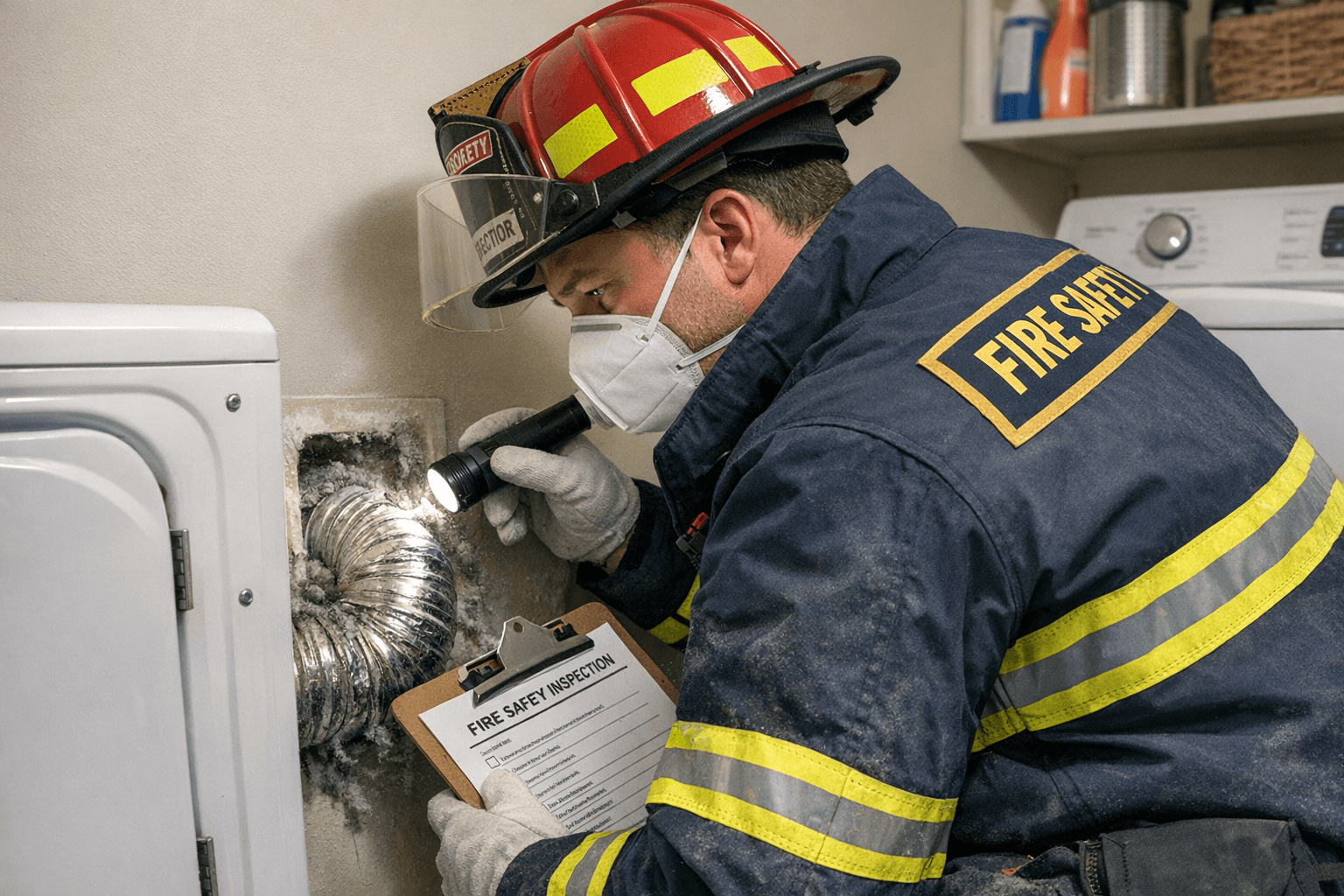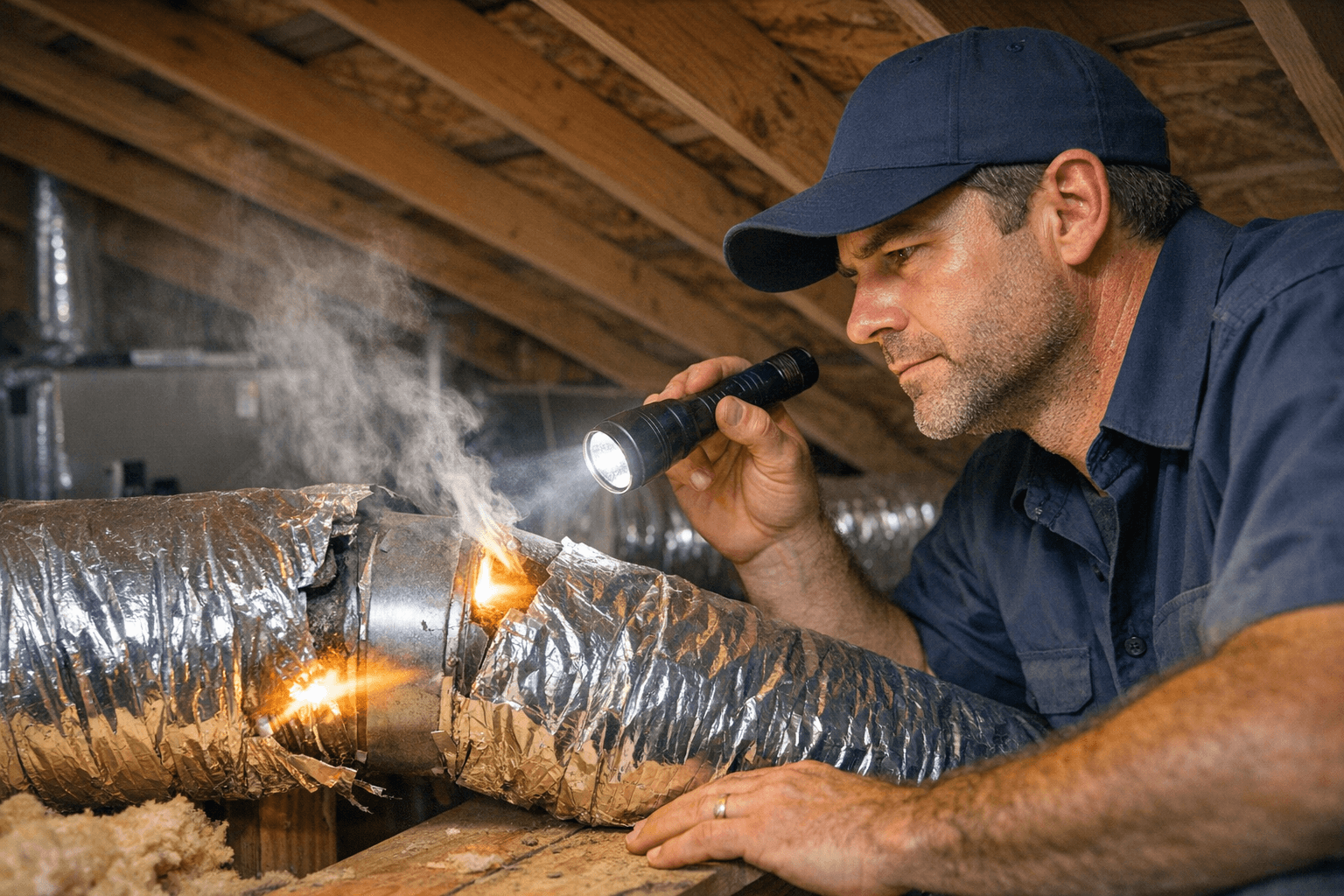
Signs of Leaky Air Ducts in Florida Homes
Leaky ducts waste conditioned air, strain your HVAC, and make some rooms feel hard to cool, especially in Florida heat and humidity. This guide covers leaky air ducts signs, quick ways to narrow down the cause, and when duct repair or air duct cleaning is the right next step.
Table of contents
- Key warning signs of leaky ductwork
- Why duct leaks hit Florida homes harder
- Common places Florida duct systems leak
- Fast homeowner checks for HVAC duct air loss
- When to schedule a professional duct inspection
- Duct repair vs. duct cleaning
- Cost expectations in Florida
- Avoiding duct leak scams and $99 bait-and-switch offers
- Service areas in Florida
- FAQ
- Sources
Key warning signs of leaky ductwork
These ductwork leaking signs are the most reliable indicators that conditioned air is escaping before it reaches your rooms.
- Uneven temperatures from room to room
- One bedroom stays warm while the rest of the home feels closer to the thermostat setting.
- Weak airflow at certain supply vents
- A few registers blow noticeably less air even after you replace the HVAC filter.
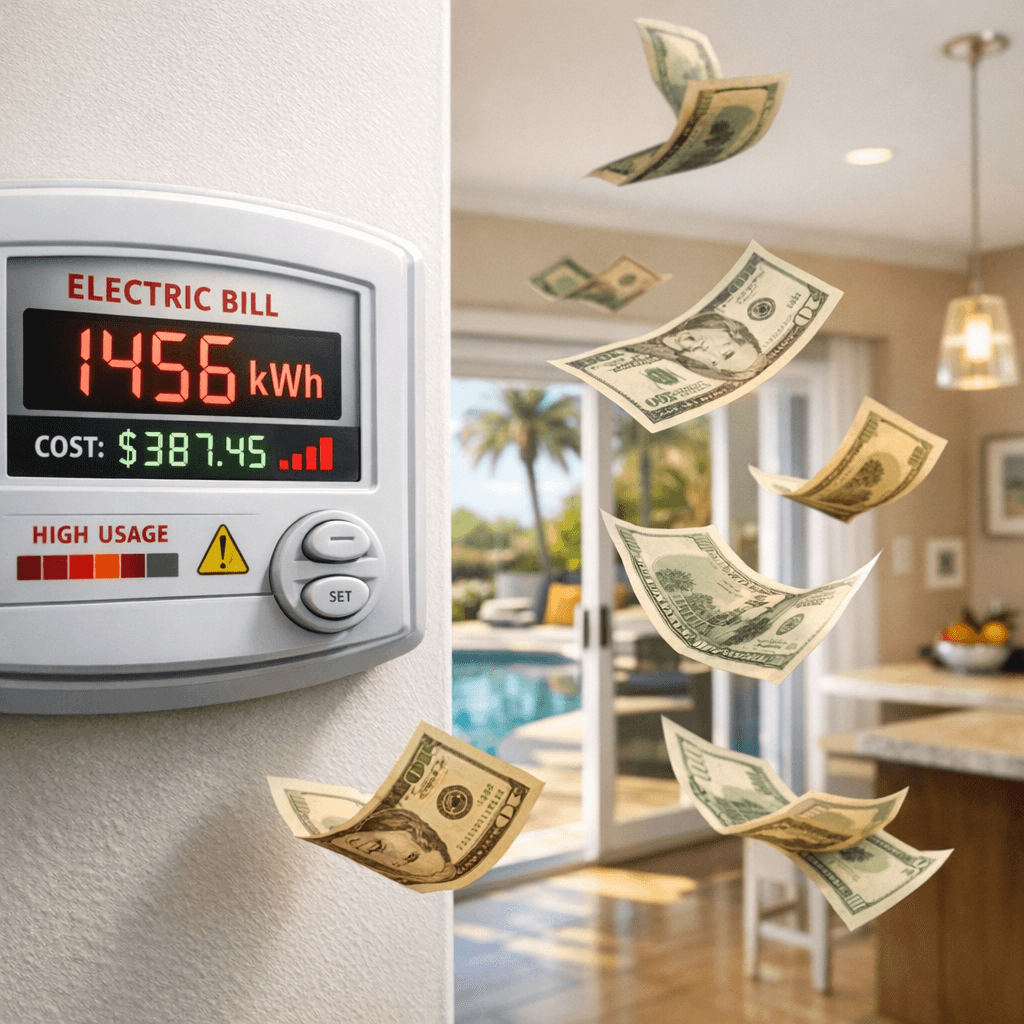
- Longer run times and higher utility bills
- Your HVAC runs longer to reach the same setpoint, often paired with rising monthly costs.
- Dust returning quickly after normal cleaning
- Duct leaks (especially on return-side ductwork) can pull in dusty air from attics, garages, and wall cavities.
- Musty or "attic-like" odors when the system turns on
- Smells that are strongest at startup can point to return leaks pulling air from unconditioned spaces.
- Whistling, hissing, or rattling near duct runs
- Air moving through gaps can create noise at seams, boots, or loose connections.
- Hot or humid spots in the home
- In Florida, duct leakage can contribute to sticky indoor air and comfort swings, especially in rooms far from the air handler.
- Visible duct damage or disconnected sections
- Crushed flex duct, separated joints, missing straps, and torn insulation in attic duct runs are common.
- Insulation dark streaking near duct seams
- Darkened insulation around a joint can indicate air movement carrying dust through the gap.
Quick next step
If you see two or more of these leaky air ducts signs, schedule a duct inspection and estimate with Air Duct & Chimney Services. Call 813-513-7861 or book online at https://proairchimney.com/contact.
Why duct leaks hit Florida homes harder
Duct leakage is a problem anywhere, but Florida conditions can make the effects more noticeable.
- Cooling dominates most of the year
- When cooled air leaks into an attic, you are paying to cool an unconditioned space.
- Humidity management matters
- Leaks can reduce delivered airflow and disrupt how your system removes moisture, contributing to clammy comfort.
- Attic temperatures are punishing
- Leaking supply ducts in a hot attic can mean warmer air at the vents and longer HVAC cycles.
- Energy loss is common
- The U.S. Department of Energy notes that, in a typical house, about 20%–30% of the air moving through duct systems is lost due to leaks, holes, and poor connections.
Common places Florida duct systems leak
Most duct leakage comes from a handful of predictable locations.
- Return plenum and return connections
- Return-side leaks can pull hot, dusty, or humid air from unconditioned areas into the system.
- Air handler cabinet seams
- Gaps around panels, knockouts, and penetrations can leak air and reduce performance.
- Boots at ceiling or floor registers
- The joint where the duct meets the register boot can separate or was never sealed well.
- Flex duct connections
- Loose straps, poor clamps, or dried-out tape at collars lead to leaks.
- Duct board seams
- Older tape can fail, and seams can open over time.
- Disconnected ducts in the attic
- A fully separated duct is dramatic, but even partial separation can cause major HVAC duct air loss.
Fast homeowner checks for HVAC duct air loss
These checks help you confirm likely duct leakage without specialized tools. Keep them practical and safe.
- Airflow comparison check
- With the system running, compare airflow by feel at each supply vent.
- If one or two vents are consistently weak, note the rooms for inspection.
- Listen at common leak points
- Stand near the return grille, air handler closet, and any accessible duct runs.
- Hissing or whistling can point to gaps at seams or panel edges.
- Temperature split at the vent
- If air feels significantly warmer at far vents than near vents, that can align with supply leakage in an attic run.
- Dust pattern check
- Dark streaking around vent edges or rapid dust accumulation can indicate air movement and leakage at boots or returns.
- Attic visual scan when accessible
- Look for disconnected ducts, crushed sections, torn insulation, or obvious gaps.
- Avoid stepping off framing members and avoid disturbing insulation.
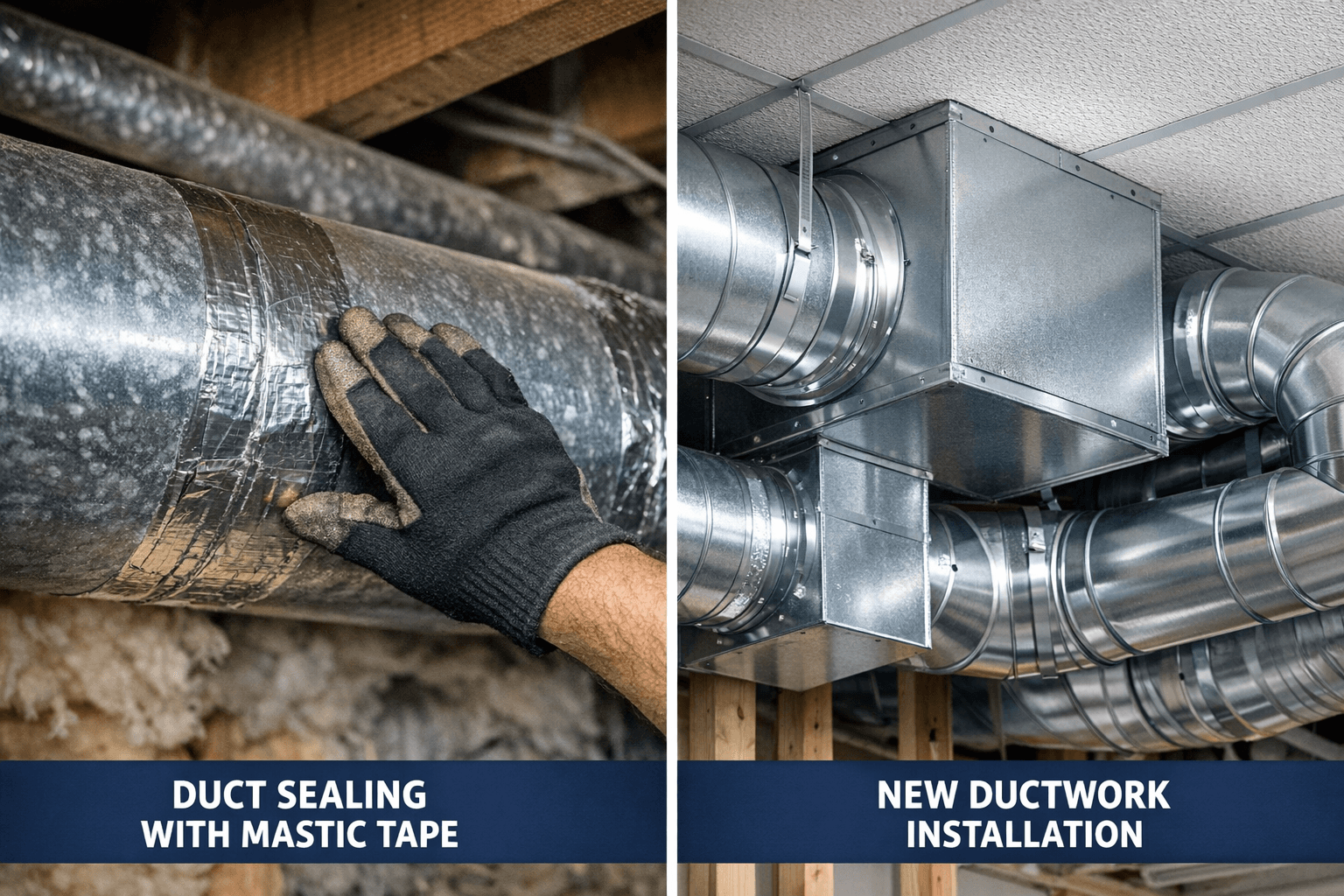
Important note on sealing: Many homeowners reach for "duct tape." DOE guidance warns against cloth-backed rubber adhesive duct tape for duct sealing because it tends to fail. Proper materials and methods matter.
When to schedule a professional duct inspection
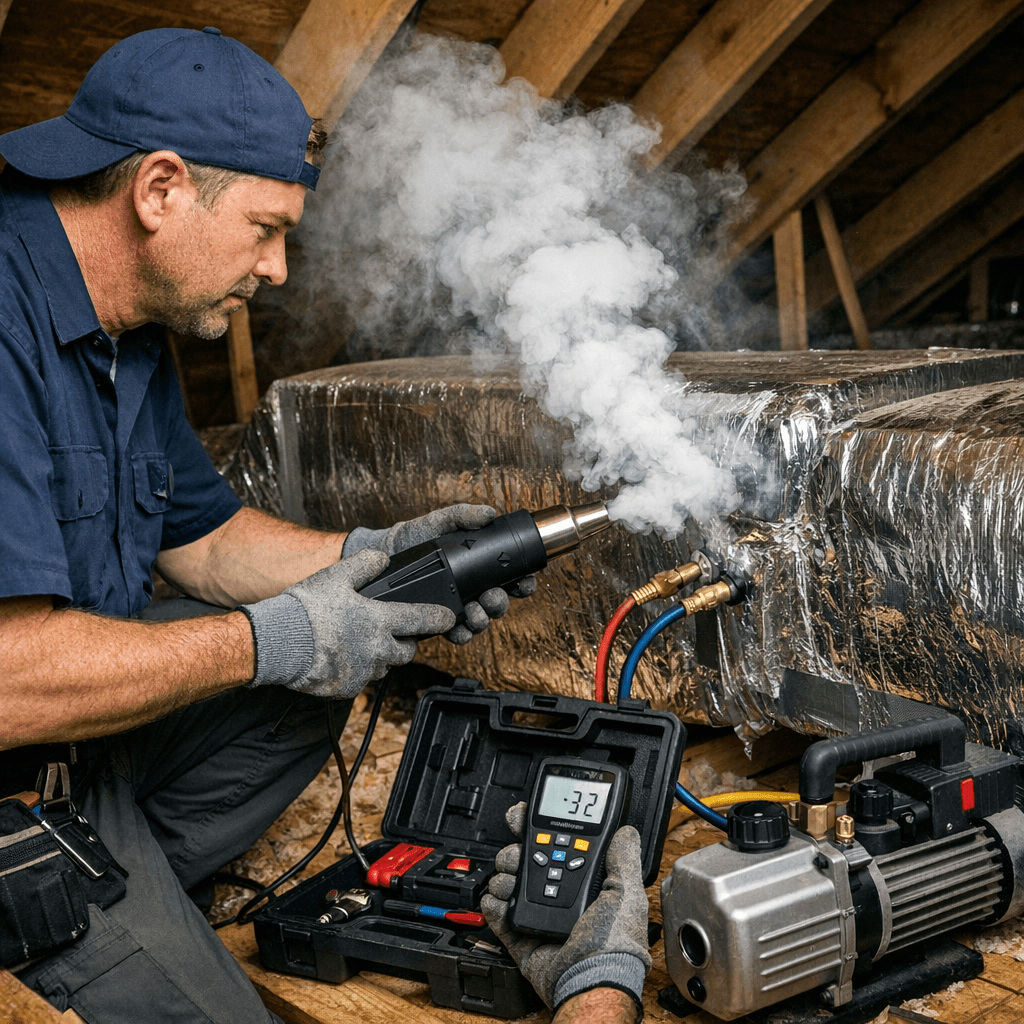
A professional inspection is worth it when comfort or energy loss is persistent, or when you suspect multiple leak points.
Schedule an inspection if you have any of the following:
- Two or more rooms that never cool evenly
- Noticeable airflow loss after you have replaced the air filter
- A return grille that seems to "pull" too hard
- Visible duct damage or disconnected duct sections
- Concerns about moisture around ducts, wet insulation, or recurring musty odors
A proper inspection focuses on locating and prioritizing leakage points so repairs target the real losses, not just the easy-to-reach spots. For service options, see:
- Duct repair: /services/duct-repair
- System inspections: /services/system-inspections
Duct repair vs. duct cleaning
Leaks and contamination are different problems. Many Florida homes need one, not both.
Duct repair is for air loss and comfort problems
Choose duct repair when the main issue is:
- weak airflow,
- uneven temperatures,
- high runtime and energy waste,
- disconnected, crushed, or poorly sealed duct sections.
Duct repair focuses on restoring airflow delivery by sealing joints, reconnecting runs, and correcting obvious defects. Duct repair varies by scope, because the amount of accessible ductwork, number of leak points, and repair complexity can differ significantly home to home.
Learn more: /services/duct-repair
Air duct cleaning is for buildup and specific conditions
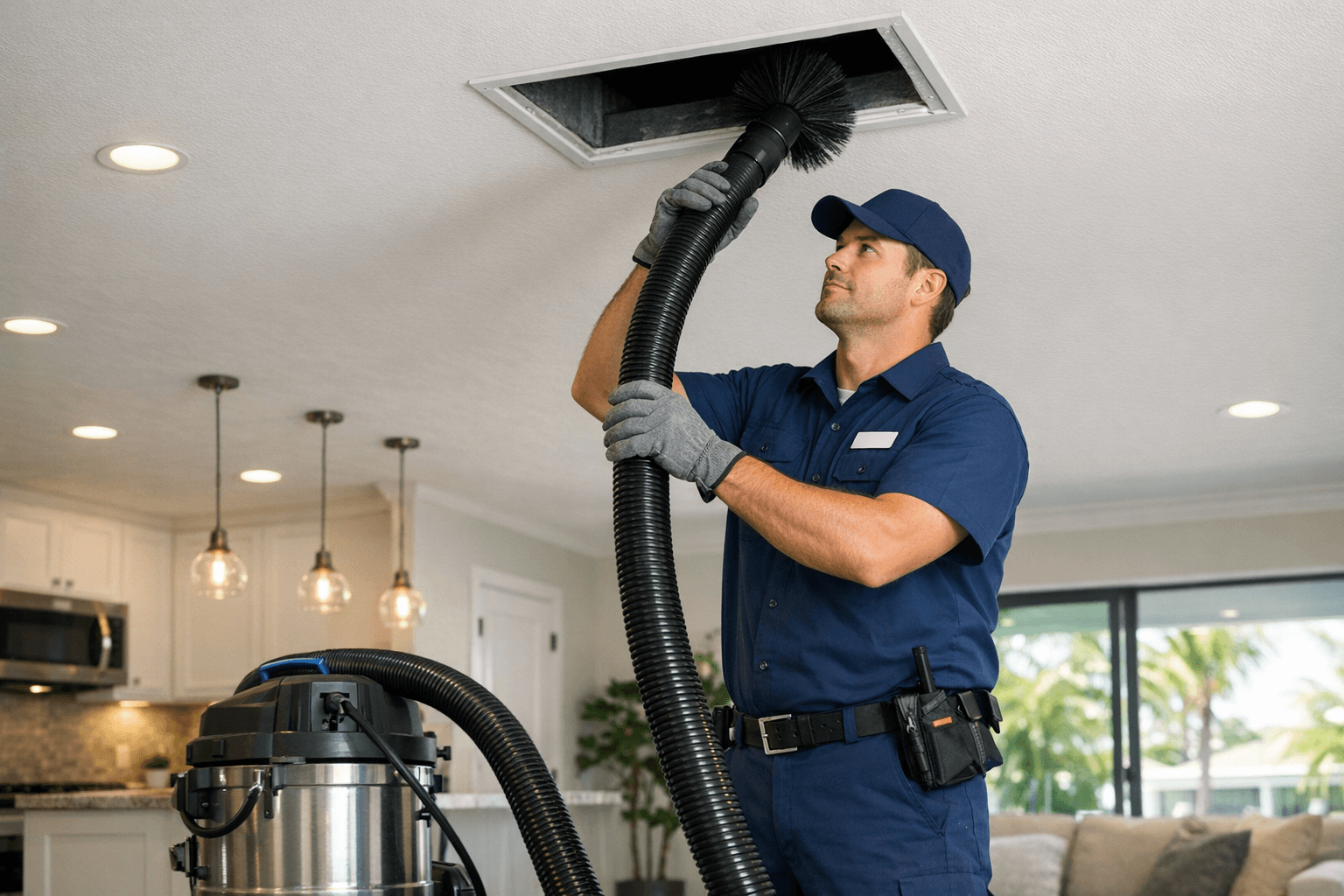
EPA does not recommend routine duct cleaning on a set schedule. Cleaning is generally considered when needed, such as when there is substantial visible mold growth on hard duct surfaces, vermin infestation, or ducts clogged with debris that is released into the home.
If you are considering cleaning, focus on:
- a clear reason for cleaning (not a sales pitch),
- a scope that includes the full system components involved,
- avoiding claims that cleaning will automatically solve health issues.
Learn more: /services/air-duct-cleaning
A common Florida scenario
- Return leak + dusty odor: often solved with duct repair and sealing first.
- Post-renovation debris: cleaning may make sense when contamination is confirmed, and leaks should still be repaired so the system stays clean longer.
Cost expectations in Florida
Use these ranges as realistic planning numbers.
- Air duct cleaning: $300-$700
- Best reserved for situations where cleaning is actually justified and performed thoroughly.
- Duct repair varies by scope
- Costs depend on accessibility (attic layout), number of connections to reseal, damaged sections that need replacement, and whether returns need attention.
If you want a straightforward estimate tied to what your system actually needs, schedule an inspection:
- Online: https://proairchimney.com/contact
- Phone: 813-513-7861
Avoiding duct leak scams and $99 bait-and-switch offers
Florida homeowners regularly run into ultra-low advertised prices that turn into high-pressure add-ons once a crew arrives.
Watch for these red flags:
- $99 whole-house duct cleaning offers
- Often used to get in the door, then upsold into expensive "sanitizers," "mold treatments," or extra fees per vent.
- Routine cleaning promises
- EPA does not recommend duct cleaning as a routine schedule item.
- Big health or medical claims
- Be cautious of anyone promising sweeping health benefits from duct cleaning.
- Vague scope
- You should be told what will be inspected, what will be sealed or repaired, and how results will be verified.
- Pushing chemicals inside ducts without a clear reason
- Understand what is being applied, why, and whether it is appropriate for your duct materials. EPA advises caution around chemical treatments and sealants.
A practical way to protect yourself is to request a written scope and confirm whether the recommendation is duct repair, cleaning when needed, or both.
Service areas in Florida
Air Duct & Chimney Services provides duct inspections, duct repair, and air duct cleaning services across Florida, including:
- Orlando
- Miami
- Tampa
- Jacksonville
- Gainesville
- Sarasota
See coverage details here: /service-areas Schedule here: /contact or https://proairchimney.com/contact
FAQ
Confirming leaky air ducts signs without special equipment
Combine airflow differences (strong in some rooms, weak in others), rising runtime and bills, and attic-visible damage like disconnected or crushed duct runs. The more signs that stack together, the more likely duct leakage is contributing.
Typical ductwork leaking signs around vents and returns
Look for whistling or hissing, dust streaking around registers, loose boots, and musty odors at system startup. Return-side leaks can also make the system seem unusually "hungry" for air at the return grille.
Air duct leaks Florida homeowners notice first
The most common first clue is comfort inconsistency: a room that never feels as cool as the rest of the home. The second is cost: longer cycles and higher bills during peak cooling months.
When duct repair is the priority over air duct cleaning
If comfort, airflow, or energy loss are the main problems, duct repair is usually the priority. Cleaning is best reserved for confirmed contamination conditions and should not be sold as a routine requirement.
Why HVAC duct air loss increases energy use
When air escapes through leaks before it reaches your rooms, the HVAC system runs longer to meet the thermostat setting. DOE notes typical duct systems can lose about 20%–30% of the air moving through them due to leaks and poor connections.